Since 1 January 2024, Colorado has required agricultural equipment manufacturers to open up their repair resources. The law, HB23-1011, obliges a manufacturer to provide “parts, embedded software, firmware, tools, or documentation, such as diagnostic, maintenance, or repair manuals, diagrams, or similar information” to “independent repair providers and owners of the manufacturer’s agricultural equipment.” Failing to do so “is a deceptive trade practice.”
It is one state and one category of machine. It is also the clearest signal yet of where the argument over equipment repair is heading, and it changes the question a manufacturer should be asking about connected equipment. The question is no longer only what the manufacturer can see. It is what the owner, and whoever the owner chooses to fix the machine, can see as well.
 Key Takeaways
- Colorado’s agricultural right-to-repair law has applied since 1 January 2024 and treats a manufacturer’s failure to provide repair resources as a deceptive trade practice.
- The resources named include embedded software, firmware, tools and diagnostic documentation, and the law’s summary adds data to that list.
- The law does not permit repairs that defeat safety systems, emissions compliance or intellectual property protections, so it is narrower than it is often described.
- Connected equipment raises the stakes, because the most useful diagnostic information increasingly lives in a system the owner may not be able to reach.
What the Law Actually Requires
The core obligation is to make repair possible without the manufacturer’s own service network. Owners and independent repair providers must be able to get the parts, software, firmware, tools and documentation needed to diagnose, maintain and repair the equipment.
Two details in the bill summary are worth reading carefully. The law adds data to the resources a manufacturer must provide, which matters more every year as machines become more software-dependent. And signing a nationwide memorandum of understanding on repair does not exempt a manufacturer from the state requirements. The voluntary route and the legal route are separate obligations.
Violations are handled as a deceptive trade practice, which puts enforcement into existing consumer protection law rather than creating a new regulator.
What It Does Not Require
The law is frequently described as if it hands owners unlimited access to everything inside a machine. It does not.
The summary is explicit that it does not authorise anyone to modify equipment in a way that “deactivates a safety notification system or brings the equipment out of compliance with safety or emissions laws or to engage in any conduct that would evade emissions, copyright, trademark, or patent laws.”
That is a meaningful boundary. A manufacturer is required to enable repair, not to surrender its source code, weaken its emissions controls or give up its trade secrets. Designing well for this kind of law is mostly about deciding, deliberately, which information is a repair resource and which is protected, and then making the first category genuinely available.
Why Connected Equipment Makes This Harder
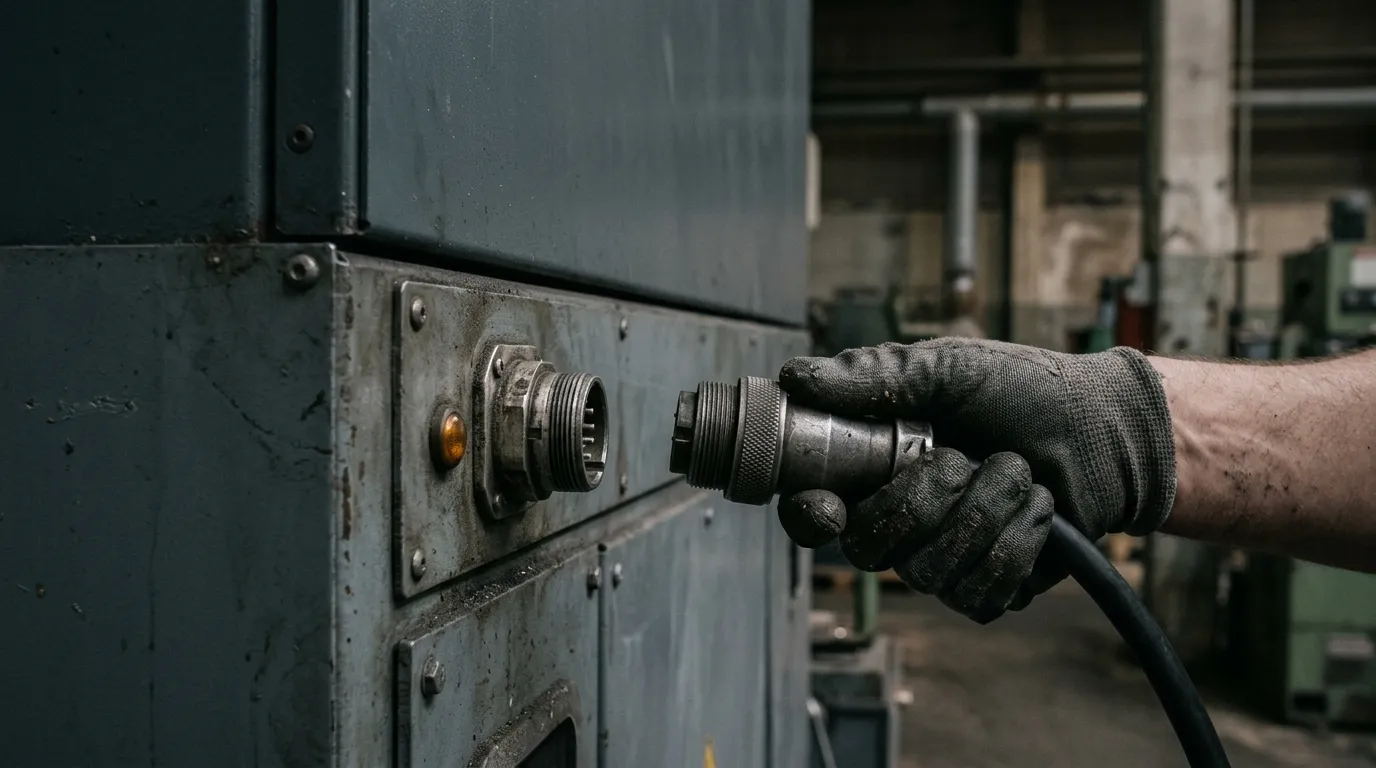 On an older machine, diagnostic information lived in the machine. A technician with the right tool plugged in and read it.
On a connected machine, a growing share of the most useful information lives somewhere else. Fault history, operating hours, the conditions that preceded a failure and the electrical behaviour over the past month may all sit in a manufacturer’s platform rather than on the unit itself.
That is where the interaction with repair law becomes awkward. If the diagnostic picture a dealer technician relies on is only available through a manufacturer portal, then an independent repairer working from the machine alone is working with less, and a law written around access to diagnostic resources starts to reach the data layer. The question of who controls that data layer, and on what terms, is part of the same argument covered in how manufacturers see what happens in their dealer network.
The Commercial Case Is Not Only Defensive
It is tempting to treat repair law purely as a compliance cost. That undersells what is at stake for the manufacturer.
Machines get repaired by whoever is nearest and fastest. In a region where the dealer is two hours away, that is often an independent shop or the owner’s own maintenance team. If they cannot diagnose the machine properly, the repair is slower, the wrong part gets fitted more often, and the machine’s reputation for reliability suffers, regardless of who did the work.
A manufacturer whose equipment is straightforward to diagnose correctly is protecting its own product. The same logic sits behind first-time fix: the expensive part of a repair is usually the information gap before anyone touches the machine, which is the argument in how manufacturers improve first-time fix rates.
Decide Now What Counts as a Repair Resource
The practical work for a manufacturer is classification, done before the rules force it.
Some information is clearly a repair resource: fault codes and their meaning, accumulated operating hours, service intervals, the conditions around a failure, and the procedure to clear a fault after a fix. Some is clearly protected: control algorithms, calibration logic, anything that would let a user defeat an emissions or safety system.
The difficult middle is operating data from connected equipment. Runtime, electrical behaviour and fault history are extremely valuable for diagnosis and are also, in aggregate, valuable commercial information. Deciding how an owner and their chosen repairer see that data for their own machine, while the fleet-level view stays with the manufacturer, is a design choice that is far cheaper to make now than under a compliance deadline.
What to Settle Before the Next Model Ships
A short list covers most of it. Can an owner or an independent repairer see the fault history and operating hours of their own machine without going through your dealer? Is there a documented way to clear a fault after an independent repair? Have you written down which data you treat as a repair resource and which as protected, and does engineering agree with legal about the line? And if a customer asks for their machine’s history in a portable form, can you give it to them?
Manufacturers who can answer those are in a good position whatever the next law says. Manufacturers who cannot will find the answers being written for them.
 Where ARMOR™ Fits
ARMOR™ is built on a shared record rather than a closed one. ARMOR 4+™ reports runtime hours, voltage and current from the machine into ARMOR Asset Central™, and the platform separates what the manufacturer, the dealer and the owner each see, so access to an individual machine’s history can be granted by configuration.
That makes the repair-resource question something a manufacturer can answer deliberately. An owner and their chosen repairer can be given the operating history of their own equipment, while fleet-level analysis stays with the manufacturer. ARMOR™ does not decide where that line sits, and it does not make a manufacturer compliant with any repair law. It gives the manufacturer the means to draw the line and apply it.
The unit installs non-destructively using standard wiring harnesses, with no bill-of-materials redesign. How it is built in at the production stage is set out on the ARMOR™ for Equipment Manufacturers page.
Frequently Asked Questions
We do not make agricultural equipment. Does this apply to us?
Colorado’s HB23-1011 is specific to agricultural equipment. Repair legislation is being debated for other categories, and the direction is consistent, so treating it as a design consideration now is cheaper than retrofitting under a deadline. Check the rules that apply to your specific products and markets.
Does right to repair mean giving away our intellectual property?
Not under this law. It explicitly does not authorise conduct that would evade copyright, trademark or patent law, or defeat safety and emissions systems. The obligation is to enable repair, which is narrower than disclosing everything.
Will opening up diagnostics hurt our dealer network?
It changes the dealer’s advantage from exclusive access to better service. That is a real shift and some dealers will resist it. The counterweight is that a machine that is easy to diagnose correctly keeps its reputation, and dealers sell reputation.
Should the connected data be treated as a repair resource?
That is the decision most manufacturers have not yet made, and it deserves a deliberate answer rather than a default. A reasonable position is that an owner’s access to their own machine’s history is a repair resource, while aggregated fleet data is not.
See how ARMOR™ is built into equipment like yours, at the build stage. ARMOR™ for Equipment Manufacturers