Fourteen percent of truck rolls, one in seven onsite service visits, are unnecessary, according to Aquant’s 2025 Field Service Benchmark Report. The van is loaded, the technician drives out, and the trip should never have happened.
The same report puts the first-time fix rate at 86 percent for top performers and 53 percent for the bottom of the field. That is not a small spread. It is the difference between a service organisation that mostly works and one where nearly half of all visits fail to finish the job.
For an equipment manufacturer, those visits are not somebody else’s problem. During the warranty period the manufacturer is paying for them.
Key Takeaways
- One in seven onsite service visits is unnecessary, and a failed first visit adds two more visits and 14 days to resolution.
- The gap between the best and worst first-time fix rates is 86 percent against 53 percent, and it is driven by information rather than by technician skill.
- Avoidable dispatch rates run at 3 percent for top performers and 24 percent for the bottom fifth, an eight-fold difference.
- The decision that determines whether a visit succeeds is made before anyone gets in the van.
 The Second Visit Is the Expensive One
A first visit that fails is not simply a wasted day. According to the same benchmark data, a failed first visit adds two further visits on average and extends resolution by 14 days.
So the cost is not one trip. It is three trips, a fortnight of a machine not earning, and a customer who now has a view about your equipment that has very little to do with your equipment.
Most manufacturers track service cost as a total. Very few separate the visits that fixed something from the visits that only gathered information. Those are different activities with very different economics, and merging them hides the entire problem.
The Gap Is Not Technician Skill
It is tempting to read an 86 versus 53 percent spread as a story about training. It usually is not.
The same report puts avoidable dispatch rates at 3 percent for top performers and 24 percent for the bottom twenty percent. An eight-fold gap in dispatches that should never have been sent is not a gap in how well people repair machines. It is a gap in what was known before anyone decided to send them.
A technician who arrives with the wrong part did not make a mistake. Somebody guessed, upstream, and the guess was the only option available.
What the Technician Does Not Know Before Leaving
Consider what actually reaches a service desk when a machine goes down. A phone call. A description from an operator who may not be technical. Possibly a fault code, read aloud. Sometimes a photograph.
From that, someone decides whether to dispatch, who to send, and which parts to load. What they usually cannot see is:
- How many hours the machine has actually run
- What load it has been carrying, and whether that is normal for this unit
- Whether any reading was drifting before the failure
- What was replaced at the last service, and by whom
- Whether other units in the same conditions have failed the same way
Every one of those is knowable from the machine. None of it is in the phone call.
Diagnosis Starts Before the Van Does
When a machine reports continuously, the dispatch decision changes character. It stops being a judgement call made from a description and becomes a reading made from a record.
That has three practical effects. The right technician is sent, because the likely fault is known rather than guessed. The right parts are loaded, because the component is identified before anyone leaves. And some visits do not happen at all, because the problem turns out to be a setting, a consumable or an operator question that can be resolved from a distance.
 The third effect is the one with the largest number attached to it, and it is the one nobody markets, because a visit that does not happen produces no invoice and no photograph.
The Visit You Do Not Make
There is a reason this is worth a manufacturer’s attention specifically.
Dealers carry the cost of unnecessary visits in time and staffing. Manufacturers carry it in warranty reimbursement, in goodwill claims, and in the slow erosion of a dealer network’s willingness to support a product line that is expensive to service.
A product that is cheap to keep running is easier for a dealer to sell. That is a commercial argument about your equipment, not about your service department.
What You Should Know Before Dispatching
A practical test. For the machine that just triggered a call, can you answer these before deciding whether to send anyone?
- Is this a failure, or a machine being operated outside its intended duty?
- Which component is most likely involved, and is it in stock locally?
- Has anything been drifting on this unit over the past weeks?
- Have units in similar conditions shown the same pattern?
- Could this be resolved without a visit at all?
If the answer to most of these is a phone call to the site, the dispatch decision is a guess, and roughly one in seven of those guesses will send somebody out for nothing.
 Where ARMOR™ Fits
ARMOR™ captures runtime hours, location and health data directly from the machine and reports them continuously into ARMOR Asset Central™.
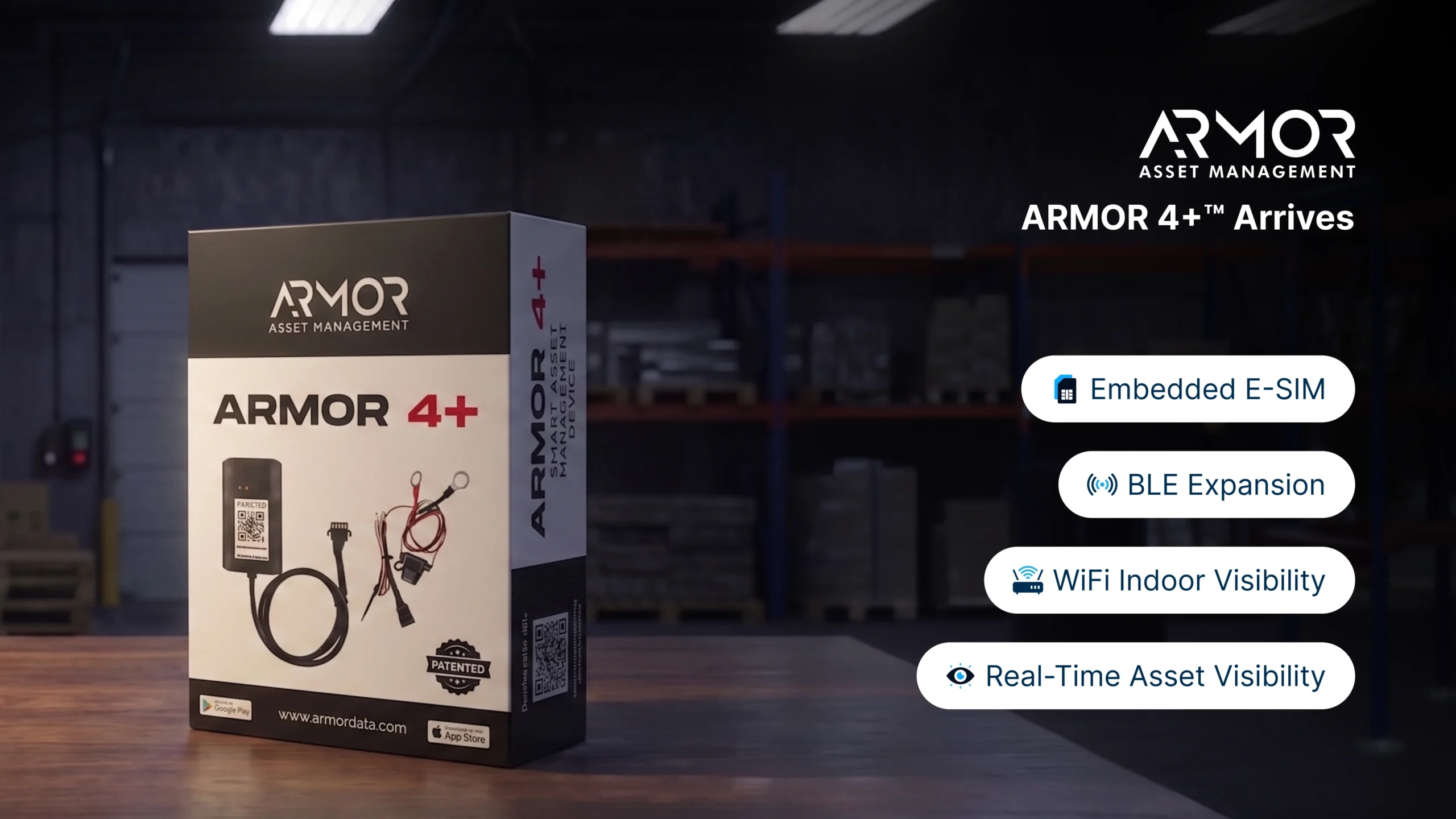
The ARMOR 4+™ unit installs non-destructively alongside your existing electrical system using standard wiring harnesses, so there is no bill-of-materials redesign. Because manufacturers, distributors, dealers and operators read from the same verified record, the person deciding whether to dispatch is looking at the machine’s own history rather than at a description of it.
It does not replace your service management system. It supplies the machine data that system has never had at the moment the decision is made.
How this works at the build stage is set out on the ARMOR for Equipment Manufacturers page.
Frequently Asked Questions
What counts as a good first-time fix rate?
Aquant’s 2025 benchmark puts top performers at 86 percent and the bottom of the field at 53 percent. Anything below roughly 70 percent suggests the dispatch decision is being made without enough information, rather than that repairs are being done badly.
Is a truck roll really avoidable if the machine has genuinely failed?
Often not, and that is fine. The avoidable ones are the visits where nothing was wrong, where the fault was a setting or a consumable, or where the technician arrived without the part and had to return. The benchmark data puts avoidable dispatches at 3 percent for the best performers, so the realistic goal is reducing them, not eliminating visits.
Our dealers handle service. Why is this a manufacturer’s problem?
Because during the warranty period the manufacturer usually reimburses it, and because a product line that is expensive to service becomes harder for a dealer network to support and to sell. The cost shows up in warranty and in dealer relationships rather than on a service P&L.
Do we need to connect every machine to see a difference?
No. The effect is strongest on the units that generate the most service activity, so a manufacturer can begin with a single product line or a single market rather than a whole installed base.
See how ARMOR™ is built into equipment like yours, at the build stage. ARMOR for Equipment Manufacturers