Organizations that focus only on purchase price end up spending 40 to 60% more over an equipment’s lifetime compared to those who calculate total cost of ownership upfront. That gap exists because the sticker price is genuinely one of the smallest numbers in the full picture. Total cost of ownership, or TCO, is the sum of every expense tied to owning and running a piece of equipment across its entire life, and most of that sum shows up long after the purchase order is signed.
Key Takeaways
- Organizations that focus only on purchase price spend 40 to 60% more over an equipment’s lifetime than those who calculate TCO upfront.
- The standard TCO formula is Acquisition Costs plus Operating Costs plus Indirect Costs, minus Resale Value.
- Maintenance costs do not rise in a straight line. They increase exponentially as equipment ages, with the sharpest jumps in the first and seventh year of service, according to research reported by E&Y.
- Downtime is one of the most commonly underestimated TCO components, and can average $9,000 per minute in some industrial settings.
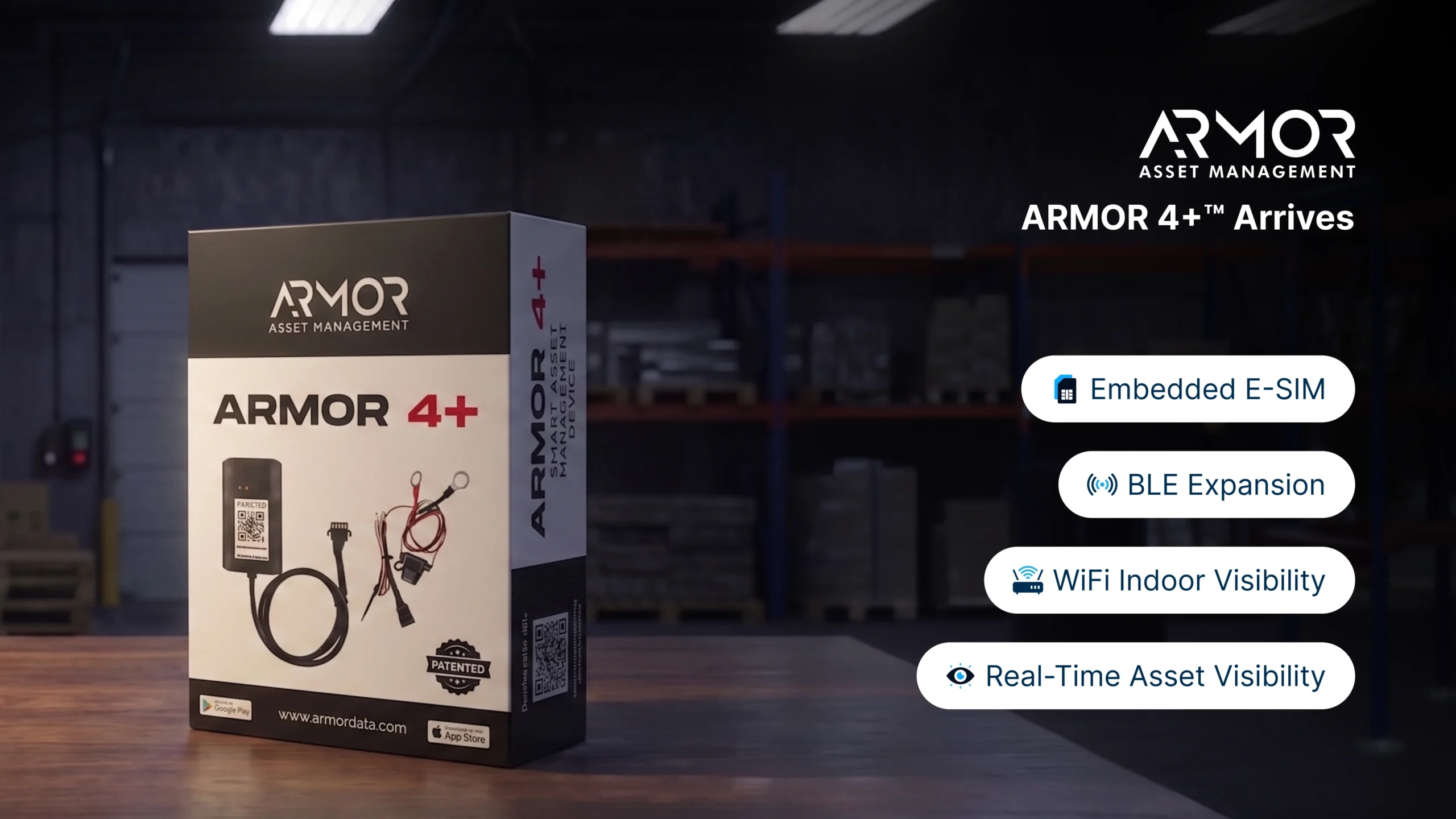
- ARMOR 4+™ feeds verified runtime and operating data directly into TCO calculations, replacing estimated maintenance costs with actual figures.
The Formula Behind Total Cost of Ownership
TCO = Acquisition Costs + Operating Costs + Indirect Costs − Resale Value. Each component covers a distinct part of an equipment’s life:
- Acquisition Costs: purchase or lease price, financing, and any upfitting or installation.
- Operating Costs: fuel or energy, scheduled maintenance, and unplanned repairs.
- Indirect Costs: administrative overhead, compliance, insurance, and downtime.
- Resale Value: subtracted at the end, since it is the one component that returns money rather than spending it.
The formula is simple. Filling it in accurately is where most organizations fall short, because several of these categories are the ones companies are least equipped to track consistently over an asset’s full life.
Why Maintenance Cost Alone Can Mislead You
Maintenance costs do not increase steadily as equipment ages. Research reported by E&Y found maintenance costs increase exponentially over an asset’s life, with the greatest jumps occurring in the first and seventh year. A team that budgets maintenance as a flat annual estimate is quietly underbudgeting for the years where costs actually spike, then gets surprised by a number that looks like an anomaly but is actually a predictable pattern.
This is why a single year of repair invoices tells you very little about whether a piece of equipment is a good long-term investment. A machine in its sixth year of service can look inexpensive to maintain right up until it crosses into year seven, at which point the same equipment, the same usage pattern, and the same maintenance program suddenly produce a very different number.
The Component Most Organizations Leave Out Entirely
Downtime rarely appears as its own line item in a TCO spreadsheet, but it belongs there. Downtime can average $9,000 per minute in some industrial settings, and even at a fraction of that figure for smaller operations, unplanned downtime is consistently one of the largest hidden costs in an equipment’s total lifetime expense. A TCO calculation that only counts fuel, maintenance, and depreciation is measuring a partial picture no matter how precise those three numbers are.
How Verified Data Changes the Calculation
Every component of TCO depends on knowing how a piece of equipment has actually been used, not how it was expected to be used when it was purchased. ARMOR 4+™ captures actual runtime hours, voltage, and impact events directly from the asset, feeding that data into ARMOR Asset Central™, the system of record for physical assets. Instead of estimating operating costs from a purchase date and an assumed usage pattern, a TCO calculation can pull from real, verified numbers for every unit in a fleet.
What This Looks Like in Practice
A facilities team evaluating whether to keep or replace a class of equipment stops estimating maintenance cost from a rule of thumb and instead pulls actual runtime and repair history from Asset Central. The TCO picture that emerges accounts for the real acquisition cost, the actual operating cost trajectory as the equipment ages, and downtime that would have otherwise gone untracked, turning a replacement decision from a budget guess into a documented calculation.
Frequently Asked Questions
What is the basic formula for total cost of ownership?
TCO equals Acquisition Costs plus Operating Costs plus Indirect Costs, minus Resale Value, covering everything from purchase price to downtime across an asset’s entire life.
Why does maintenance cost increase unevenly over time?
Research reported by E&Y found maintenance costs rise exponentially rather than steadily, with the sharpest increases in the first and seventh year of an asset’s service life.
Is downtime really part of TCO?
Yes. Downtime can average $9,000 per minute in some industrial settings and is one of the most commonly underestimated components of a full TCO calculation.
How does ARMOR™ improve TCO accuracy?
ARMOR 4+™ captures actual runtime hours, voltage, and impact events directly from the asset, and ARMOR Asset Central™ stores that history, replacing estimated operating costs with verified figures for every unit.
Want a TCO picture built on real runtime data instead of estimates? Explore ARMOR 4+™ or talk to our team about connecting your fleet.