When the California Air Resources Board adopted its Zero-Emission Forklift Regulation in June 2024, its announcement included a line that says a great deal about where equipment is heading: “about half of forklift sales in California today are zero-emission.” Forklifts are one category among many. Floor-care machines and many aerial work platforms have run on batteries for years, and more equipment types are following.
For the manufacturer, going electric changes more than the drivetrain. It changes what wears out, what fails, what a service visit is for, and what evidence a warranty decision rests on. Most of those changes play out after the machine ships, at the customer’s site, where the manufacturer has the least visibility.
Key Takeaways
- Electric equipment removes much of the routine engine service and makes the battery one of the most important and expensive wear items on the machine.
- Battery life depends heavily on how a machine is used and charged, and that happens at the customer’s site, out of the manufacturer’s sight.
- Warranty, service and parts planning for electric machines all need evidence of charging and discharge behaviour that an hour meter does not record.
- Voltage and current recorded at the machine give the manufacturer that evidence after the machine leaves the factory.
 The Service Calendar Changes Shape
An engine brings a predictable rhythm of service: oil, filters, fuel system, cooling system, all on intervals measured in hours. Dealers build service businesses around that rhythm, and manufacturers build parts forecasts around it.
An electric drive has fewer fluids and fewer of those routine tasks. The work does not disappear. It moves to the battery, the charger, cables and connectors, contactors and motor controllers. Those components fail differently. Many of them give little warning in normal operation, and a fault can sit in the machine, the battery or the charger, which are not always made or serviced by the same company.
The result is that the interval-driven service model most dealers know best fits electric equipment less well. Service shifts from changing parts on a schedule to understanding the condition of a few expensive components.
The Battery Becomes the Wear Item
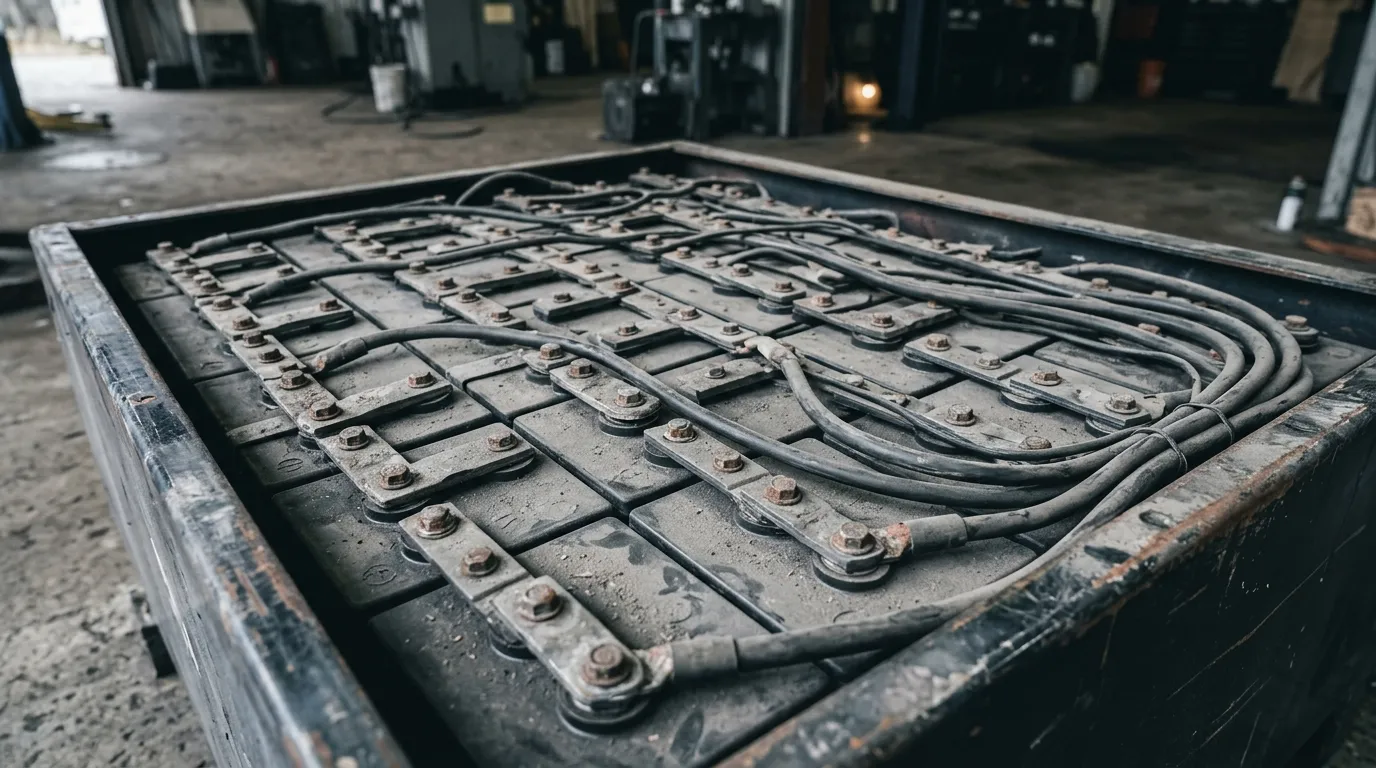 A battery ages with use. How fast depends on how many charge and discharge cycles it goes through, how deeply it is discharged, the temperatures it works and charges in, and how it is charged. Flooded lead-acid batteries need regular watering and full charges to reach their expected life. Lithium packs are managed by their own battery management system, but they still age with every cycle and every period spent at the extremes of charge.
That makes the battery different from almost any other part on the machine. Its remaining life is not visible from the outside, it is not well predicted by the calendar, and it is not well predicted by hours alone. Two machines with the same hours can have batteries in very different condition because one was charged carefully and the other was not.
For a manufacturer, the battery is often the component that decides whether the customer thinks the machine has been reliable.
Battery Life Is Decided at the Customer’s Site
The behaviours that shorten battery life happen between shifts, not during them. A machine is left partly discharged over a weekend. It is plugged in for twenty minutes at lunch and unplugged before the charge finishes. It is run until it stops, again and again. It is charged on the wrong charger, or in a hot room, or not at all because the charger was moved.
None of this is visible to the manufacturer. It is often not visible to the customer’s own managers either, because charging is handled by whoever is on shift. By the time the effect shows up, as shorter runtime per charge or a battery that will not hold a charge, the cause is weeks or months in the past.
This is the core difficulty of supporting electric equipment in the field. The most important factor in how long the machine’s most important component lasts is the one nobody is recording.
Warranty Claims Become Harder to Judge
When a battery fails early, the warranty question is the familiar one: was it a defect, or was it how the machine was used? With an engine, there is usually some evidence to go on, such as oil analysis, fault codes or obvious damage. With a battery, the history that would separate a weak cell from months of deep discharges is usually gone.
Without that history, the decision is made on judgement, relationship and policy. Approve too readily and battery warranty costs climb. Refuse too readily and customers conclude the product is unreliable. The broader version of this problem, telling misuse from defect when the claim arrives without its evidence, is covered in how manufacturers reduce the cost of warranty claims.
Charging Is Part of the Product Now
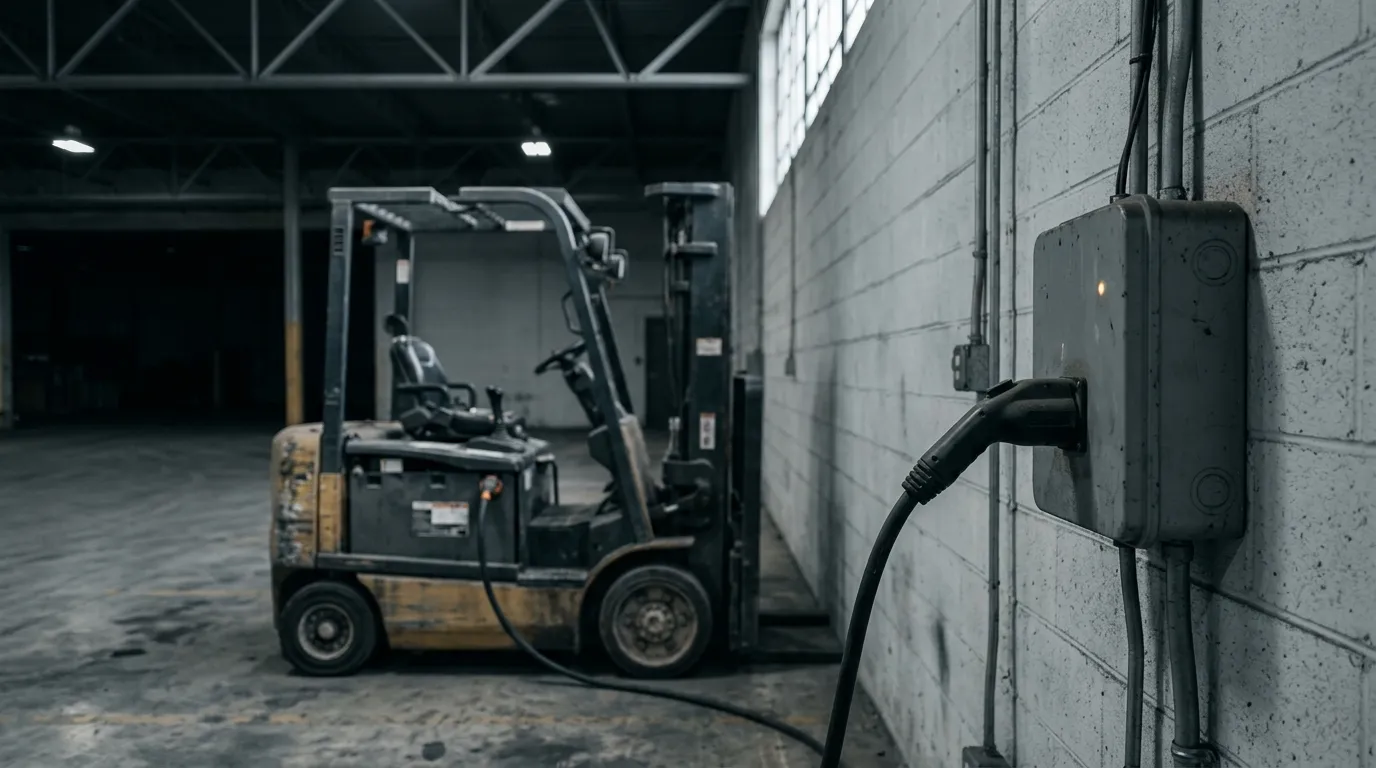
An electric machine depends on something outside it: the charger and the electrical supply at the customer’s site. When the machine does not run a full shift, the fault may be in the battery, the charger, the site’s power or the charging routine. A technician sent to look at the machine may be looking in the wrong place.
The CARB announcement reflects how real this constraint is. The regulation it describes includes compliance extensions for delays with “infrastructure construction, infrastructure site electrification” and zero-emission forklift delivery. Charging infrastructure is treated as a practical limit on how quickly equipment can change, not a detail.
For the manufacturer, that means the service picture is incomplete unless it includes how and when the machine was charged, not only how it ran.
What to Measure Once the Machine Ships
The information that matters most for electric equipment is electrical. Voltage over time shows how deeply the machine is discharged and whether charges complete. Current under load shows how hard the machine is working and whether draw is changing as components age. Runtime between charges shows whether the battery is losing capacity. Charging events show whether the customer’s routine matches what the battery needs.
Taken together, these turn the battery from a component whose condition is guessed into one whose history is known. That history supports warranty decisions, tells dealers which machines need attention before they fail, and gives engineering real duty cycles to design the next battery and charger around. For the operator-side view of what runtime, battery and location data can do, see how runtime, battery and location data improve asset management.
The decision about what to measure is easiest to make before the design is frozen, when connectivity can be built in rather than added later.
 Where ARMOR™ Fits
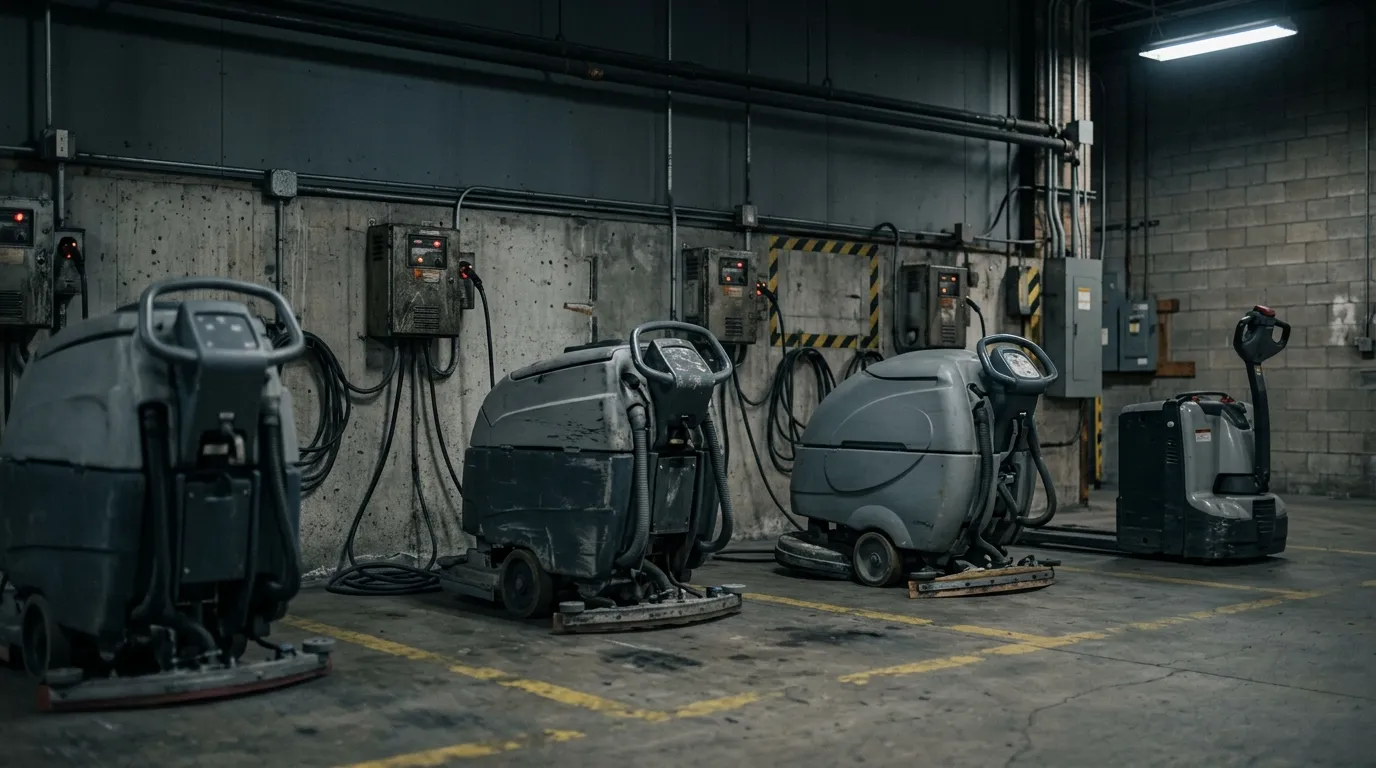
ARMOR™ records the electrical history electric equipment is judged by. ARMOR 4+™ wires into the machine’s electrical system and reports runtime hours, voltage and current into ARMOR Asset Central™, so how the machine’s electrical system behaved in use, out of the manufacturer’s sight, becomes a record that the manufacturer, dealer and customer can each read.
ARMOR™ does not replace a battery’s own management system, diagnose individual cells or decide warranty claims. It supplies the facts those decisions are made on, and it sits alongside existing systems rather than replacing them.
The unit installs non-destructively on standard wiring harnesses, with no bill-of-materials redesign. How it is built in at the production stage is set out on the ARMOR™ for Equipment Manufacturers page.
Frequently Asked Questions
Does electric equipment need less service?
It usually needs fewer routine engine tasks, but the battery, charger and electrical components still need attention. The work changes more than it shrinks, and it depends more on understanding condition than on following a fixed schedule.
Is this only relevant to forklifts?
No. Forklifts are a well-documented example, but the same issues apply to any battery-powered machine, including floor-care equipment, aerial work platforms and compact machines.
Can we tell battery abuse from a defective battery?
Often, with enough history. A record of voltage and current can show repeated deep discharges, incomplete charges or unusual draw. A defect inside a cell may still need the pack’s own diagnostics or a teardown to confirm.
Should we plan around regulations like California’s?
Regulations are one driver among several, and they differ by market and can change. Check the current status of any rule in the markets you sell into, and plan your service model for electric equipment on its own merits.
See how ARMOR™ is built into equipment like yours, at the build stage. ARMOR™ for Equipment Manufacturers