In July 2026, Samsara’s State of Connected Operations Asset Theft and Loss Report found that equipment theft and loss drains an average of $13.2 million a year in operational costs from mid-size organizations without asset visibility hardware in place. Most finance teams never see that number, because it does not show up as a single line item. It hides across replacement purchases, idle crews, rush orders, and insurance premiums on equipment nobody can currently locate. Calculating the real cost starts with knowing where to look.
Key Takeaways
- Equipment theft and loss costs mid-size organizations an average of $13.2 million a year in operational drain without visibility hardware in place (Samsara, 2026).
- 72% of that cost comes from disappearing assets valued under $10,000, tools, sensors, generators, and parts, not the large machinery that makes headlines (Samsara, 2026).
- Estimates attributed to Gartner and cited across industry sources suggest companies without precise asset records spend up to 30% more on procurement, buying equipment they already own but cannot locate.
- Eptura’s 2026 maturity-assessment research associates unified asset visibility platforms with 15% lower logistics costs and 35% better inventory management at more mature stages.
- The real cost calculation has to include small, easily replaced items, since they account for most of the loss.
The Number Most Companies Never Calculate
In July 2026, Samsara’s State of Connected Operations Asset Theft and Loss Report put the average operational cost of equipment theft and loss at $13.2 million a year for mid-size organizations without visibility hardware, based on a study of financial executives across construction, logistics, field service, and utilities. That figure is described as a “hidden cost of asset invisibility” rather than a straightforward theft statistic, because most of it never appears as a clean line item. It shows up as replacement purchases nobody flagged as unusual, crews standing idle waiting for a tool that should already be on site, and insurance premiums quietly paid on equipment that no longer exists anywhere but the books. ARMOR Beacon accessories
It Is Not the Big Equipment Draining the Budget
The more counterintuitive part of the Samsara data is where the cost actually concentrates. 72% of the operational costs in the report came from disappearing assets valued under $10,000, tools, sensors, generators, and specialized parts, rather than the heavy machinery that usually gets the security budget and the headlines. This reframes the calculation most teams get wrong. A security plan built around protecting the excavator misses the category actually driving the loss. If a cost calculation only accounts for high-value equipment, it is measuring less than a third of the real exposure.
The Procurement Line You Are Already Paying Without Noticing
Estimates attributed to Gartner and repeated across several industry sources put the added procurement cost at up to 30% for companies without precise asset records, since teams end up buying equipment they already own but cannot locate. This estimate is widely cited rather than tied to a single primary report, so treat it as a directional figure rather than an exact benchmark, but the mechanism it describes matches what shows up in the more rigorously sourced Samsara data: unaccounted equipment gets repurchased quietly, and the repurchase never gets connected back to the original loss.
What Changes When Visibility Becomes a System, Not a Guess
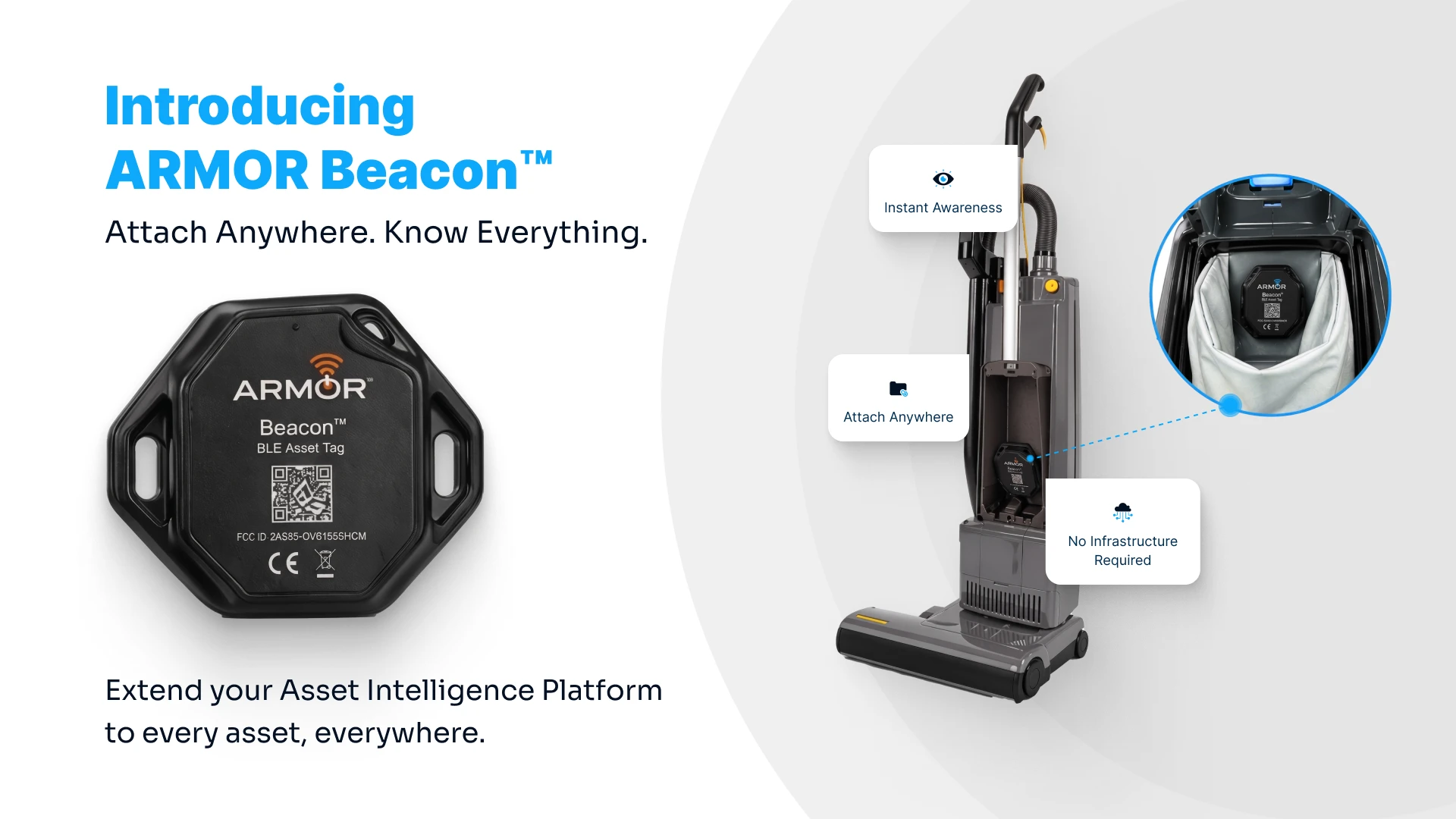
Eptura’s 2026 asset visibility maturity assessment associates the more advanced stages of visibility adoption with 15% lower logistics costs and 35% better inventory management. That figure comes from an interactive maturity framework rather than a controlled study, so treat it as directional rather than a guaranteed outcome. Still, the pattern across all of this data points to the same underlying fix: cost drops when equipment location and status stop being something someone has to remember and start being something the system already confirms. ARMOR Beacon™ and Beacon+™ accessories are built for exactly the category the Samsara data flags as highest-risk. Because they add ongoing proximity confirmation for smaller, easily-moved equipment through the ARMOR™ App, the assets least likely to justify a dedicated GPS unit are the ones most likely to benefit from a simple, low-cost presence check feeding into ARMOR Asset Central™, the system of record for every connected asset. ARMOR Asset Central overview
A Simple Way to Estimate Your Own Exposure
Calculating the cost is the first step — see what fixing it actually requires operationally.
Start with the category the data says matters most: the full list of equipment under $10,000 in value that could plausibly walk off a job site unnoticed. For each one, ask how long it would take anyone to notice it was missing, and what the last time was that anyone confirmed it was actually where the records say it is. Equipment nobody could answer both questions about with confidence is the equipment most likely already contributing to a cost nobody has calculated yet.
Frequently Asked Questions
What is the average cost of poor asset visibility for a mid-size operation?
Samsara’s 2026 State of Connected Operations report found equipment theft and loss costs mid-size organizations an average of $13.2 million a year in operational drain when visibility hardware is not in place.
Why do small tools and parts cost more than heavy machinery losses?
According to the same Samsara report, 72% of operational losses come from assets valued under $10,000, since these items are easier to misplace or take and rarely get the same security attention as large equipment.
Does improving asset visibility actually reduce costs?
Eptura’s 2026 maturity-assessment framework associates more advanced visibility adoption with 15% lower logistics costs and 35% better inventory management, though this comes from an assessment tool rather than a controlled study.
Do I need GPS hardware on every single asset to fix this?
Not necessarily. Lower-cost proximity accessories like ARMOR Beacon™ are built specifically for the smaller, frequently-moved equipment that drives most of the loss, since a dedicated GPS unit is not always cost-justified for lower-value items. Want to see where your own exposure sits? Explore ARMOR Beacon™ accessories or talk to our team about mapping your under-$10,000 equipment.