Companies maintain an accurate asset inventory across facilities by replacing periodic manual counts with continuous, verified data capture at the asset level, then feeding that data into a single system of record that every site updates in real time. Spreadsheets and annual audits cannot keep pace with assets that move, age, and change hands across multiple locations, which is why 10% to 30% of assets on the average fixed asset register no longer exist at all (itemit, 2025). That gap between what a company thinks it owns and what it actually owns is not a paperwork problem. It is an operating problem, and it gets more expensive the more facilities you add. (This is one piece of a larger multi-site visibility problem see how real-time visibility works across every location for the full picture.)
Key Takeaways
- As many as 65% of fixed asset records are incomplete, inaccurate, or missing across the average organization (itemit, 2025).
- A Harvard Business School retail study found 65% of nearly 370,000 inventory records across 37 stores were inaccurate (Harvard Business School, 2025).
- Unplanned downtime tied to poor asset visibility costs U.S. manufacturers an estimated $50 billion a year (Aberdeen Research via Reliamag, 2026).
- Multi-site companies close the accuracy gap with three layers: field-level hardware capture, one cloud system of record, and mobile verification.
- Non-destructive, always-on data capture beats scheduled audits because it catches drift the moment it happens instead of once a year.
Why Does Asset Inventory Accuracy Break Down Across Multiple Facilities?
Asset records break down across facilities because each site tends to keep its own version of the truth, and those versions rarely reconcile. Finance, operations, and field teams often maintain separate lists, and changes made in one rarely reach the others (FMIS, 2025). That disconnect compounds fast at scale. One facility retires a piece of equipment and forgets to tell finance. Another location borrows a tool for a job and never logs the transfer. A third site’s spreadsheet hasn’t been touched since the last physical count. Multiply that across ten or fifty facilities, and it’s easy to see how up to a third of a fixed asset register can end up listing equipment the company no longer owns (Gartner via Asset Panda, 2026). Manual recordkeeping is the common thread. Reliance on manual tracking, combined with disconnected systems between departments, is one of the leading causes of these “ghost assets” showing up on the books long after the equipment itself is gone (Wealth & Finance International, 2026). In practice, the pattern shows up the same way in almost every multi-site operation we’ve seen: the register looks fine on paper right up until someone tries to find the actual asset. That’s the exact gap the team behind ARMOR™ set out to close; you can read more about that background on the About Us page.
What Does an Accurate Multi-Site Inventory Process Actually Look Like?
An accurate multi-site inventory process starts with hardware that captures verified data directly from the asset, not from a spreadsheet or a purchase order. That single change is what separates a system of record from a list someone updates when they remember to. Three layers make this work together, and each one closes a different gap:
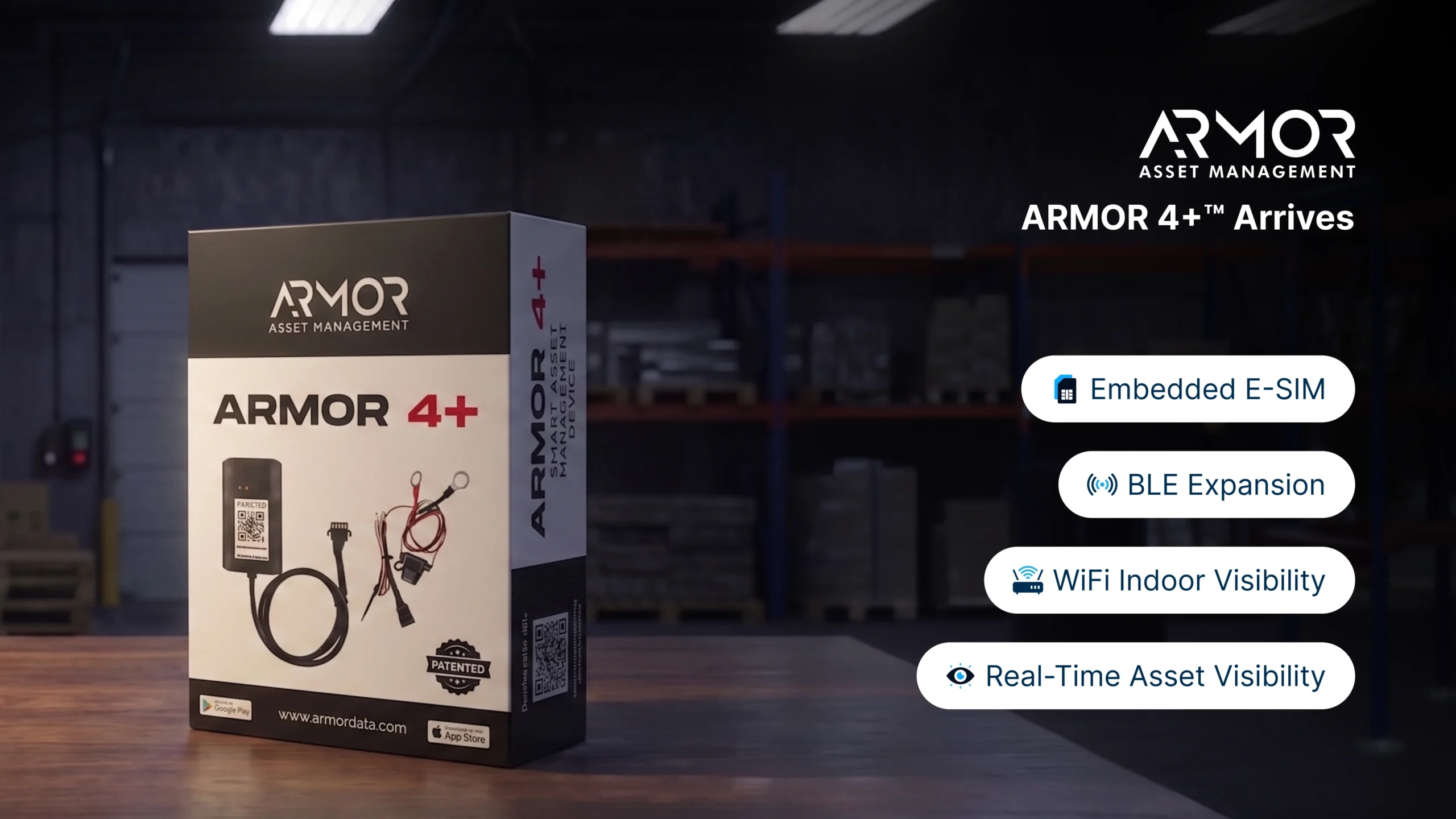
- Field hardware that identifies and verifies each asset. A non-destructive device installs alongside existing equipment, confirms asset identity, and captures real runtime hours automatically instead of relying on someone to log usage by hand. ARMOR 4+™ is built for exactly this layer.
- One cloud platform every site feeds into. Instead of separate registers per facility, department, or region, data syncs continuously into a single system of record, so the count in the platform matches what’s physically in the field. ARMOR Asset Central™ serves as that consolidated source of truth.
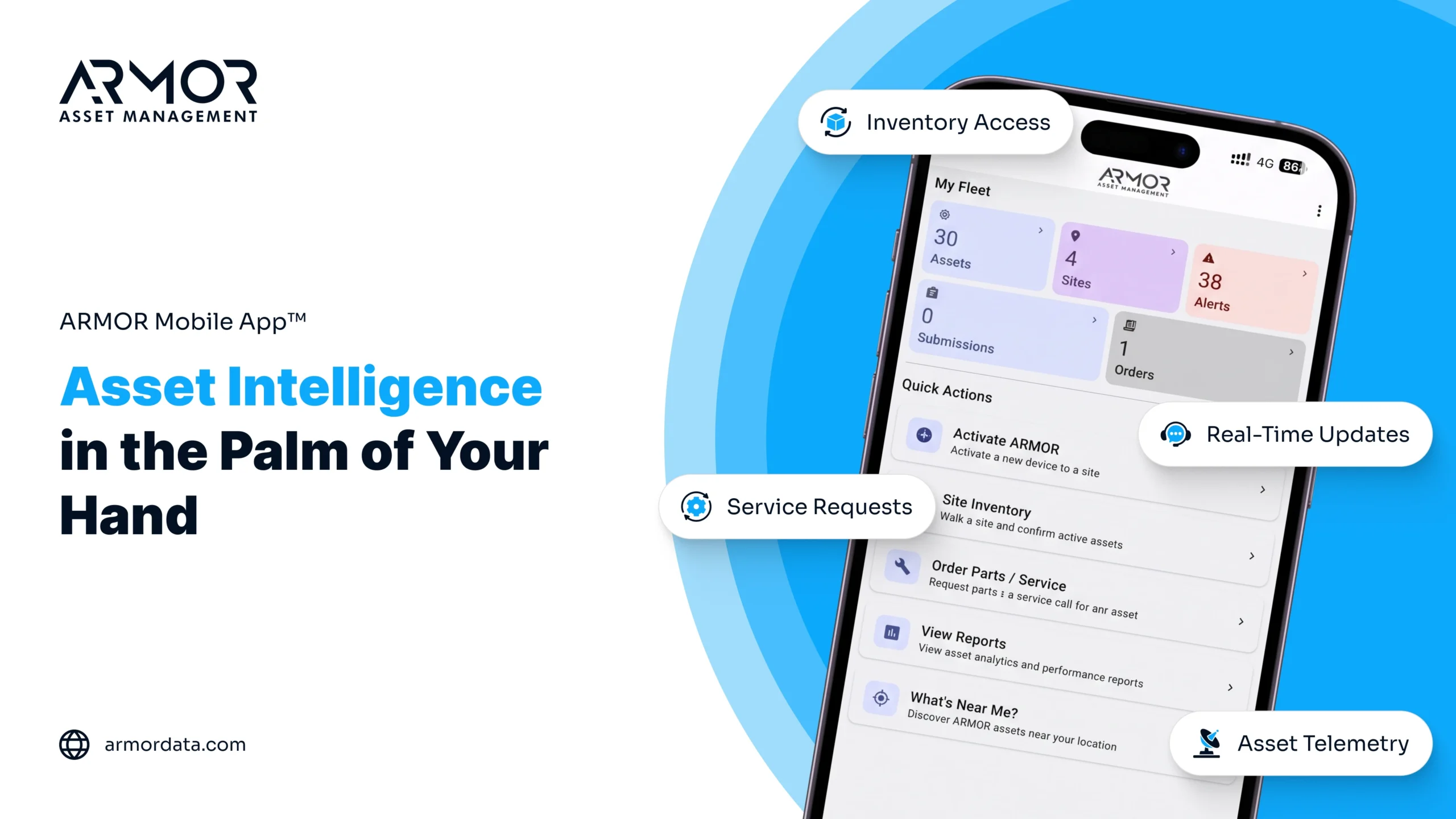
- Mobile verification for the field team. Technicians confirm asset status, log activity, and check equipment on-site from a phone, closing the loop between what the hardware reports and what a person on the ground actually sees. The ARMOR Mobile App™ covers this layer on iOS and Android.
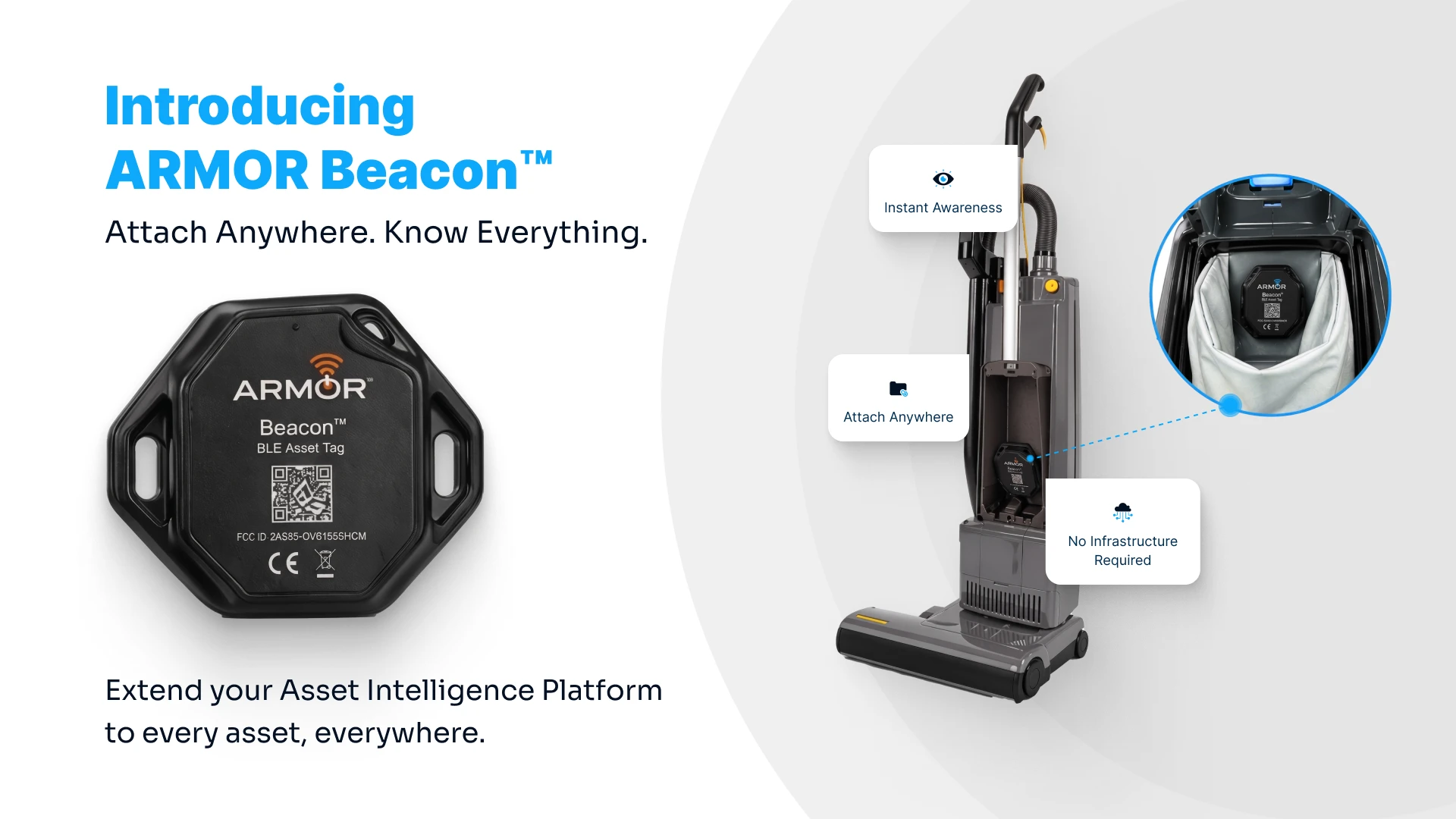
Together, these three layers turn an asset into a self-reporting source of truth instead of a line item someone has to chase down once a year. For operations that need an added layer of location precision or utilization tracking on top of the core platform, ARMOR Beacon™ and ARMOR Track™ extend the same system of record without adding a separate database to manage.
How Does Automated Tracking Improve Inventory Accuracy Compared to Manual Counts?
Automated tracking improves accuracy because it replaces a once-a-year snapshot with continuous verification, and the difference in error rates is substantial. A retail-sector study across 370,000 inventory records found 65% were inaccurate under manual and periodic-count systems (Harvard Business School via MH-USA, 2025), and correcting those records produced 4% to 8% sales growth once accuracy improved. RFID and IoT-based tracking close that gap by capturing location, identity, and usage data automatically instead of waiting for a scheduled count. Industry reporting on RFID-integrated asset management points to accuracy gains near 99.9% in asset identification once automated capture replaces manual logging (Asset Management Global, 2026), along with a 70% reduction in time spent on physical inventory counts. Adoption is accelerating industry-wide too. The global asset tracking and inventory management solution market is projected to grow from $21.15 billion in 2025 to $48.44 billion by 2031 (ResearchAndMarkets via GlobeNewswire, 2026). For a closer look at where this technology is headed, ARMOR™ Insights tracks these trends as they develop.
| Factor | Manual / Periodic Counts | Automated Tracking |
|---|---|---|
| Record accuracy | ~35% accurate on average (Harvard Business School via MH-USA, 2025) | Up to 99.9% identification accuracy (Asset Management Global, 2026) |
| Count frequency | Annual or quarterly snapshot | Continuous, real time |
| Time spent on counts | Full audit cycles, often days per site | Up to 70% less time per count (Asset Management Global, 2026) |
| Data source | Spreadsheets, manual logs, purchase records | Verified field hardware and mobile check-ins |
| Ghost asset risk | 10% to 30% of register (itemit, 2025) | Reconciled continuously as assets report status |
How Much Does Inaccurate Asset Inventory Actually Cost Operations?
Inaccurate asset inventory costs operations far more than the price of a lost tool. It shows up downstream as unplanned downtime, and unplanned downtime is one of the most expensive line items in industrial operations today. Unplanned downtime costs U.S. manufacturers an estimated $50 billion annually, with large operations losing roughly $260,000 for every hour a critical line sits idle (Aberdeen Research via Reliamag, 2026). Most of that cost traces back to visibility, not the equipment itself. Equipment failure accounts for 42% of all unplanned downtime incidents, and more than 60% of those failures stem from aging assets and deferred maintenance that nobody flagged in time (Reliamag, 2026). You can’t schedule maintenance around runtime data you don’t have. Isn’t that really the core problem? Companies aren’t short on maintenance plans. They’re short on trustworthy data to build those plans around.
Building an Asset Inventory System That Field and Office Both Trust
A trustworthy asset inventory has to work for two very different audiences at once: the field team that touches the equipment every day and the office team that reports on it every quarter. Getting both sides to trust the same number requires a system of record, meaning a single authoritative source for asset identity, runtime, location, and lifecycle status that every team references instead of maintaining a separate copy. That shift changes how organizations plan, not just how they count. When every asset reports its own status, maintenance moves from schedule-based to behavior-driven, decisions happen with less guesswork, and costs become visible before they turn into problems instead of after. Multi-site operators who’ve made this switch consistently describe the same shift: they stop reacting to breakdowns and start planning around actual usage patterns, because the runtime data from one site now informs decisions at every other site. Distribution networks get a single verified fleet record instead of scattered spreadsheets across regional warehouses. OEM manufacturers that install tracking hardware at the factory support warranty claims with real asset data instead of relying on dealer call-backs after the fact. In every case, the fix isn’t a bigger spreadsheet. It’s removing the spreadsheet from the equation entirely. You can see how the full ARMOR™ platform brings these layers together, or explore the live demo to walk through it firsthand.
Frequently Asked Questions
What is a “ghost asset” and how common is it?
A ghost asset is equipment that’s lost, sold, scrapped, or stolen but still shows up as active on a company’s asset register. Between 10% and 30% of assets on the average fixed asset register no longer exist, according to Gartner research cited by industry sources (Asset Panda, 2026).
How often should companies physically audit their asset inventory?
Annual audits catch errors far too late for multi-site operations, since a full year of drift can accumulate before anyone notices. Continuous, automated verification through field hardware and mobile check-ins replaces the once-a-year count with real-time accuracy instead of a single snapshot.
Does switching to automated asset tracking mean replacing our ERP?
No. A well-built asset intelligence layer sits alongside an existing ERP rather than replacing it, supplying verified physical asset data the ERP was never designed to capture directly from the field. Workflows and existing platforms stay in place while the underlying data becomes trustworthy. For the full case against an ERP replacement, see How Do You Manage Assets Across Many Locations Without Replacing Existing Systems? If you’re weighing how this fits your specific setup, the Support team can walk through integration questions directly.
What’s the biggest cause of inaccurate asset records across facilities?
Disconnected recordkeeping between departments and sites is the most common cause. When finance, operations, and field teams each keep separate lists, changes made in one rarely reach the others, and errors compound the more locations a company operates (FMIS, 2025).
Can accurate asset tracking actually reduce downtime?
Yes. Since 42% of unplanned downtime traces back to equipment failure, and most of those failures stem from deferred maintenance nobody flagged in time, real runtime data lets teams act before a breakdown instead of after one (Reliamag, 2026).