Remanufacturing takes a worn engine or component and returns it to the original specification, at a fraction of the cost of a new one. In a case study of a leading construction equipment manufacturer published by APEC, researchers Katherine Tait and Gary Gereffi describe remanufacturing as the process that “restores end-of-life manufactured goods to OEM specifications.” They report the firm’s own description of what customers receive: “the same form, fit, function and warranty as a new product at about half the cost.”
The whole business rests on one input, the core: the used part that comes back to be rebuilt. And most cores arrive with little or no record of the life they have had.
Key Takeaways
- Remanufacturing depends on a steady supply of cores that can actually be rebuilt to the original specification.
- Whether a core is accepted is decided by inspection after it has been removed and returned, with deposits giving dealers a reason to send it back.
- A core’s working history, how long it ran and how it was treated, shapes what can be recovered, but that history rarely travels with the part.
- Machines that record their own runtime and electrical history let the manufacturer know what a core has been through before it comes back.
 Why Manufacturers Remanufacture
The case study sets out why remanufacturing matters to a manufacturer of large, expensive equipment. It “enables the firm to retain the value of its products, stabilize demand for replacement components, and leverage its exclusive dealer network to provide information and after-sales services to customers.”
It is also a substantial activity in its own right. The chapter cites a 2012 study by the US International Trade Commission that put US remanufacturing production at “at least $43 billion” and more than 180,000 full-time jobs by 2011, and it identifies heavy-duty and off-road equipment as a major remanufacturing sector.
For the customer, a remanufactured component is a cheaper way to keep a machine working. For the manufacturer, it keeps the relationship with the customer going through its own dealer network, and it recovers value from parts that would otherwise be scrapped.
The Core Is the Raw Material
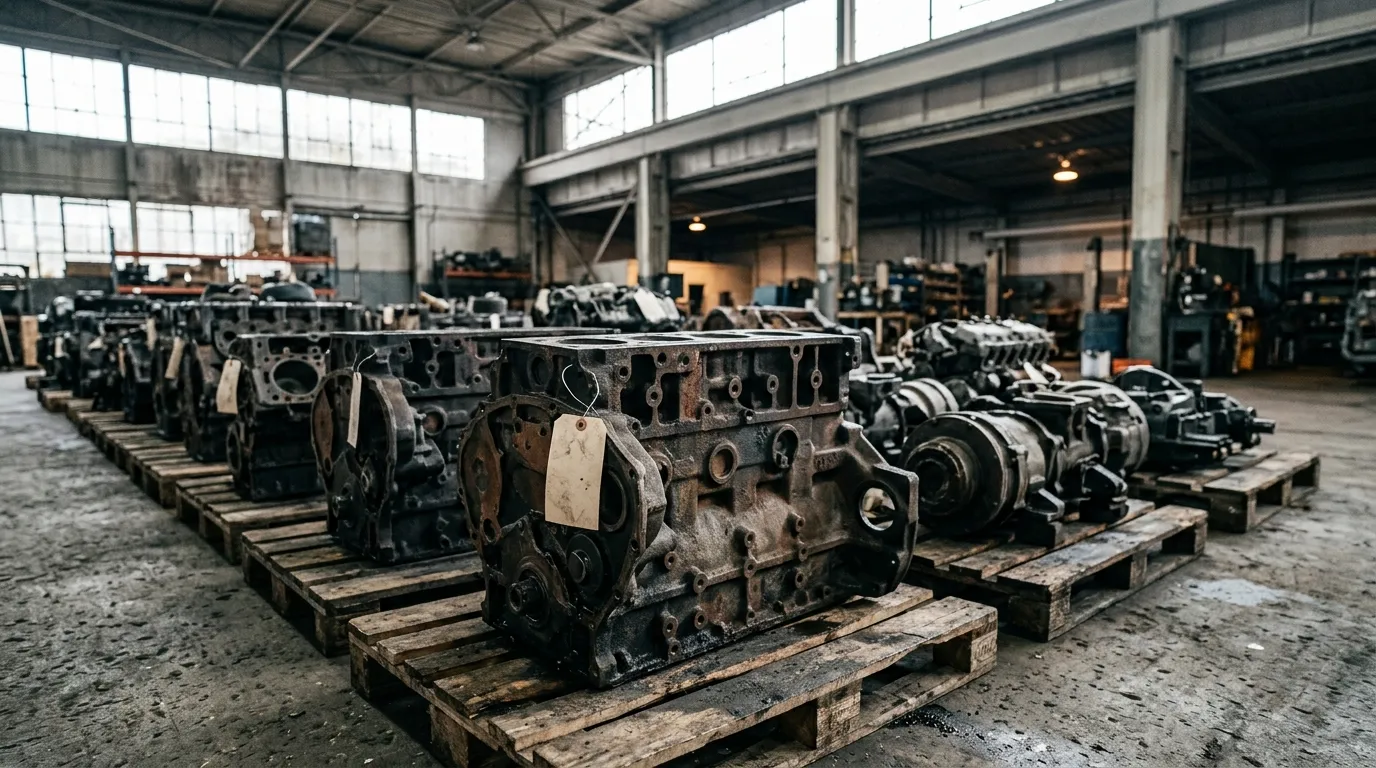
A remanufacturing operation cannot buy its raw material on the open market. It has to get its own products back. The firm in the case study describes its approach in its annual report, quoted in the chapter: “we collect a deposit from the dealer that is repaid if the dealer returns an acceptable core within a specified time period.”
The deposit gives the dealer, and through the dealer the customer, a financial reason to return the old part rather than discard it. The researchers explain the next step: “Once the dealer inspects and accepts the old product, the dealer ships the core to a core-receiving facility, which confirms the dealer’s inspection and reimburses the dealer for the deposit.” From there the core goes to a remanufacturing facility, where it is completely disassembled.
The quality of that supply decides everything that follows. A remanufacturing line with too few usable cores cannot meet demand. A line flooded with cores that cannot be rebuilt spends its effort on inspection and scrap.
Inspection Happens After the Decision
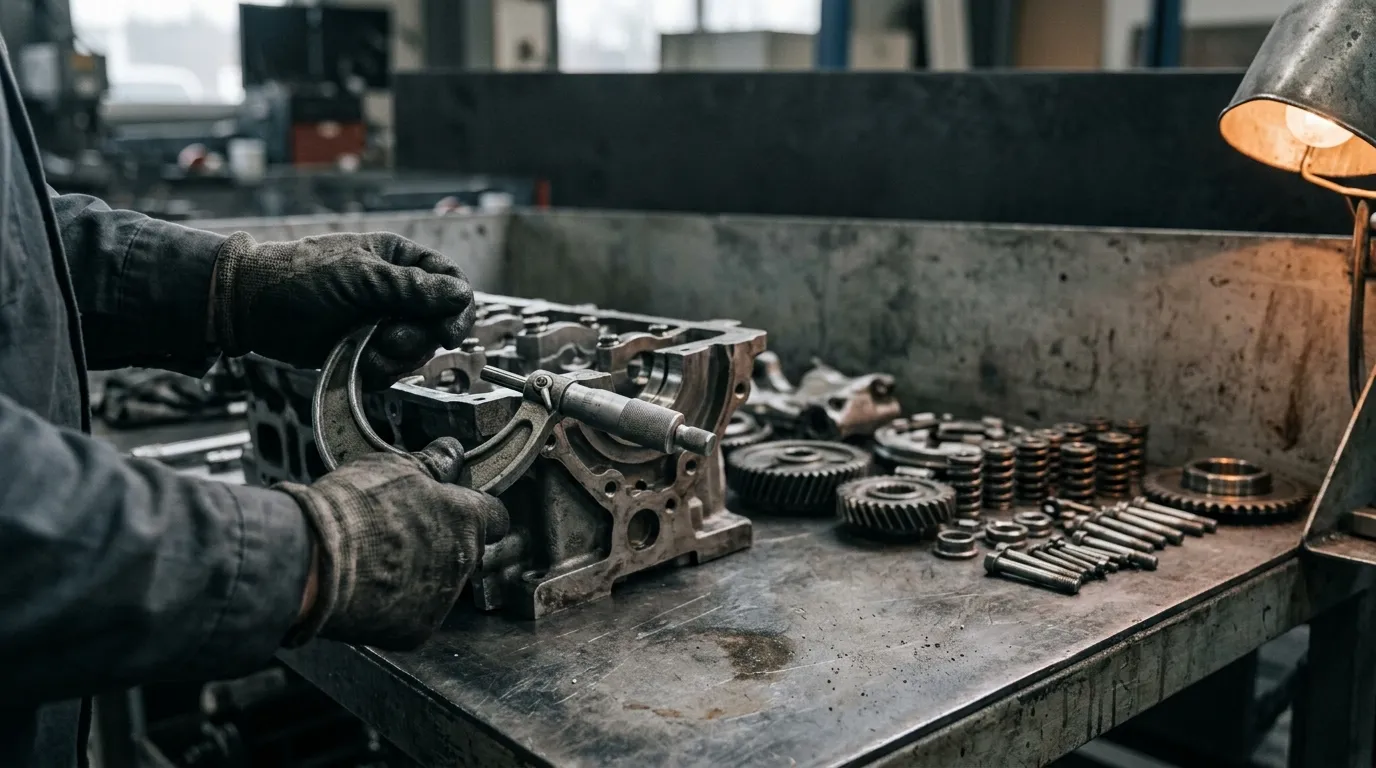 The case study describes two inspections. The dealer inspects first, which the researchers note eliminates wait time. Then the remanufacturing facility inspects again, after cleaning and full disassembly, “using detailed remanufacturing criteria to determine if the components can be remanufactured to meet original design and engineering specifications.” Components that fail are recycled.
Both inspections are necessary, and both happen late. By the time anyone examines the core, the part has already been removed from the machine, the replacement has been fitted, the deposit has been taken and the core has been shipped. A core that turns out to be unusable has already cost its removal, transport, cleaning and teardown.
Inspection is the right way to decide whether a core can be rebuilt. It is a poor way to plan how many usable cores are coming.
History Shapes What Can Be Recovered
Two cores that look identical on the bench can have had very different lives. One ran a light duty cycle for its whole service. The other ran hot, under heavy load, or through repeated electrical faults. Wear, fatigue and heat damage follow the work the component did, and much of that work leaves no visible mark until the part is opened.
The case study treats knowledge of the field as part of the value chain. Among the high-value after-sales services it lists is “the acquisition of information on condition and performance of core components already in the field.” A manufacturer that knows how its components have been used before they come back can anticipate the yield of its remanufacturing line, rather than discovering it one teardown at a time.
That knowledge is also the hardest part of the chain to keep. It sits in the customer’s operation and the dealer’s service records, and it is rarely attached to the part when it is returned.
The Dealer Sits in the Middle
In the model the case study describes, the dealer pays the deposit, inspects the core and decides whether to accept it. The dealer also often advises the customer on whether to repair a component, exchange it for a remanufactured one, or replace the machine. Those choices, made in the dealer’s workshop and the customer’s budget meeting, determine when cores enter the system and in what condition.
The customer’s side of that decision is the one covered in when to replace equipment versus repair it. For the manufacturer, the point is that the timing and quality of core supply are set by people who see the machine every day, while the remanufacturing plan is made by people who do not.
A shared record of how each machine has run narrows that gap. It lets the dealer, the customer and the manufacturer look at the same evidence when they decide whether a component is due for exchange.
Planning Remanufacturing Around the Installed Base
The cores that will come back next year are already in service today. How many there are, how many hours they have, and how hard they are working all decide when they will reach the end of their first life. A manufacturer that can see those facts across its installed base can plan remanufacturing capacity, core inventory and remanufactured parts stock against expected returns instead of last year’s returns.
The same visibility tells the manufacturer where its machines are, which matters when cores have to be collected from dealers spread across regions. It also shows which machines have gone quiet, which may mean a core is lost to the program because the machine was retired, sold on or rebuilt elsewhere. The wider problem of keeping track of machines after they ship is covered in why manufacturers lose track of equipment after it ships.
 Where ARMOR™ Fits
ARMOR™ records the working history a core should carry with it. ARMOR 4+™ wires into the machine’s electrical system and reports runtime hours, voltage and current into ARMOR Asset Central™, the system of record for runtime, location, condition and activity, so by the time a component comes out of a machine its hours and electrical history already exist.
ARMOR™ does not inspect cores, set acceptance criteria or run a remanufacturing program. It gives the manufacturer, dealer and customer a shared record of how each machine has worked, and it sits alongside existing systems rather than replacing them.
The unit installs non-destructively on standard wiring harnesses, with no bill-of-materials redesign. How it is built in at the production stage is set out on the ARMOR™ for Equipment Manufacturers page.
Frequently Asked Questions
What is a core?
A core is the used part, such as an engine or a major component, that is returned so it can be remanufactured. In the program the case study describes, a deposit is charged and repaid when an acceptable core is returned within a set period.
Can machine data replace core inspection?
No. Only inspection can confirm that a core meets the criteria for remanufacturing. Machine data helps set expectations before the core arrives and helps plan how many usable cores are likely to come back.
Is remanufacturing the same as refurbishing?
No. The case study distinguishes remanufacturing from refurbishment, rebuilding, recycling and reuse. Remanufacturing restores a product to the original specification, which is why it can carry a warranty like a new one.
Is remanufacturing only for very large manufacturers?
The case study is of a very large one, but the logic applies wherever components are valuable enough to rebuild. The scale of the program differs. The need to know what is coming back does not.
See how ARMOR™ is built into equipment like yours, at the build stage. ARMOR™ for Equipment Manufacturers