When an equipment manufacturer reports its carbon footprint, one of the categories it is asked to count is the energy its machines will use after they leave the factory. The GHG Protocol’s Technical Guidance for Calculating Scope 3 Emissions sets out the scope directly: “Category 11 includes the total expected lifetime emissions from all relevant products sold in the reporting year across the company’s product portfolio.”
For anything that runs on fuel or electricity, that is a forecast of years of operation in buildings and on sites the manufacturer will never see. And the same guidance is candid about how most companies produce it: “Calculating emissions from category 11 typically requires product design specifications and assumptions about how consumers use products (e.g., use profiles, assumed product lifetimes).”
Assumptions about how customers use products are exactly the thing a manufacturer usually knows least about.
Key Takeaways
- Scope 3 Category 11 covers the expected lifetime use-phase emissions of products sold in the reporting year, and direct use-phase emissions are required.
- Machines that consume fuel or electricity during use fall squarely into the required part of the category.
- The calculation depends on assumed use profiles and assumed lifetimes, which most manufacturers estimate rather than measure.
- Recorded operating hours from machines already in the field give those assumptions an evidence base, and support the intensity metrics the guidance recommends.
 What Category 11 Asks a Manufacturer to Count
The category covers “emissions from the use of goods and services sold by the reporting company in the reporting year.” The guidance splits it into direct and indirect use-phase emissions, and states that “companies are required to include direct use-phase emissions of sold products.”
Direct use-phase emissions come from “products that directly consume energy (fuels or electricity) during use”, and the examples given include engines and motors. Industrial equipment that runs on diesel, propane, mains power or batteries sits in that required group.
The timing is what makes it unusual. The emissions are counted in the year the product is sold, but they happen over its whole working life. The guidance’s own worked example describes a company reporting “the anticipated use-phase emissions” of everything it sold in a year, over the products’ expected lifetime.
The Number Rests on Three Assumptions
For a machine, the calculation comes down to how much energy it uses per hour of operation, how many hours it operates each year, and how many years it stays in service.
The first can be measured on a test bench. The other two describe the customer’s behaviour, not the machine’s, and they are usually filled in from a design specification, a sales team’s view of typical use, or an industry rule of thumb.
The guidance requires companies to “report a description of the methodologies and assumptions used to calculate emissions.” That requirement exposes the weakness. An assumption of 1,500 operating hours a year across a fleet whose real average is 900, or 2,400, does not produce a slightly inaccurate number. It produces a number that is wrong by the same proportion, applied to every unit sold.
Customers Do Not Use Machines the Way the Specification Assumes
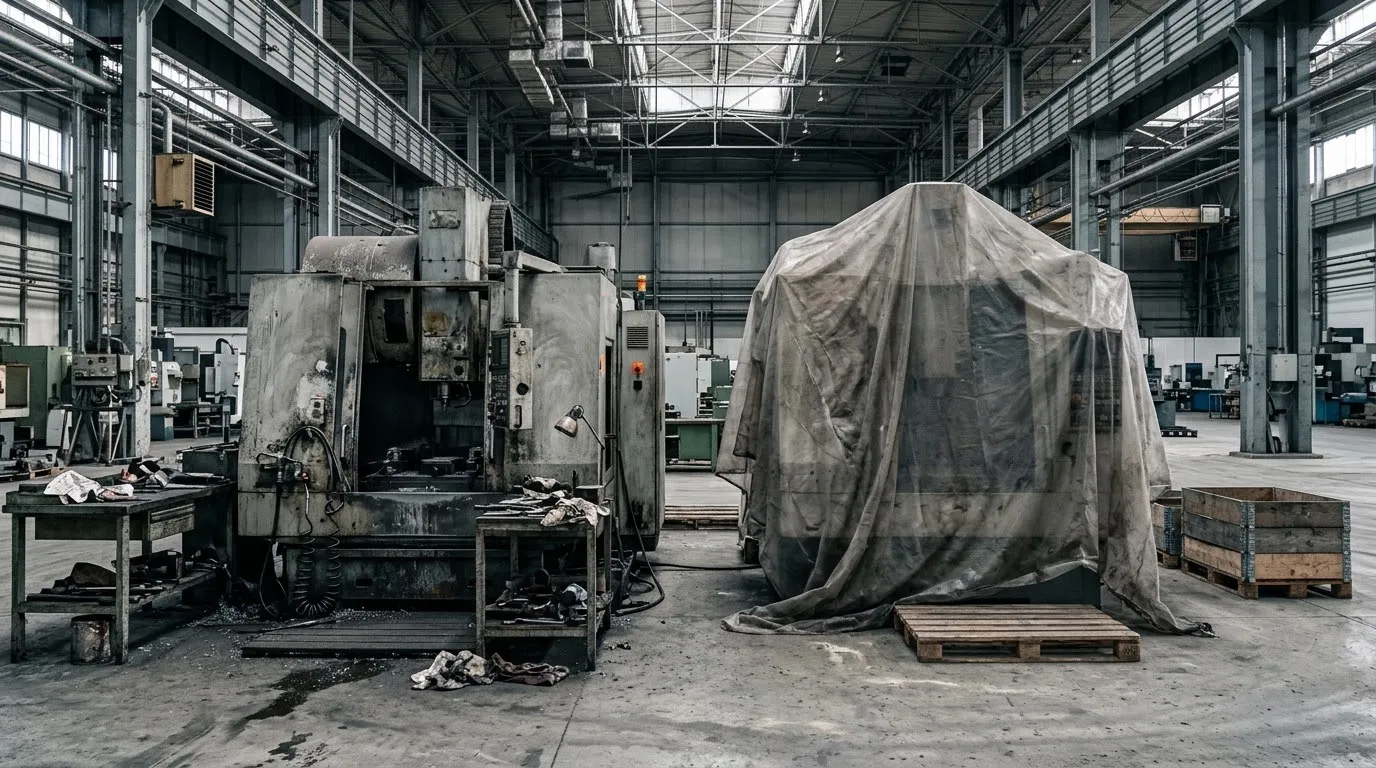 Equipment in the field has a spread of use that a single average hides. Some machines run two shifts a day. Some sit idle for weeks. Some are retired early, others run twice as long as anyone planned.
That spread is exactly what a manufacturer cannot see without data from the machines. The same gap between design assumption and field reality shows up in reliability engineering, where the duty cycle a product was designed for often differs from the one it actually meets. The emissions calculation inherits the same blind spot, and it is one reason field data matters well beyond maintenance.
Operating hours recorded by the machine itself change the basis of the estimate. The expected lifetime emissions of this year’s sales are still a projection, but they can be projected from how the previous generation of units actually ran rather than from how it was expected to.
Durable Equipment Can Look Worse Than It Is
The guidance identifies a problem that matters particularly to makers of long-lived machines. “Because the scope 3 inventory accounts for total lifetime emissions of sold products, companies that produce more durable products with longer lifetimes could appear to be penalized because, as product lifetimes increase, scope 3 emissions increase, assuming all else is constant.”
Its remedy is to report additional context, “such as product lifetimes and emissions intensity metrics to demonstrate product performance over time”, and it lists examples including “annual emissions per product, energy efficiency per product, emissions per hour of use”.
Emissions per hour of use is a natural measure for equipment, and it has an obvious requirement: you have to know the hours. A manufacturer that can show recorded operating hours and energy behaviour across its installed base can make that case with evidence. One that relies on an assumed figure is asking readers to take the assumption on trust.
Assumptions Have to Be Revisited
The guidance refers companies to the Scope 3 Standard’s rules on recalculating base year emissions “when methodologies or assumptions related to category 11 change over time.” Moving from assumed use profiles to measured ones is exactly that kind of change.
It is better to plan for it than to be surprised by it. A manufacturer that starts collecting operating data now can improve its assumptions gradually, document why each change was made, and show a consistent methodology. One that waits until a customer or auditor challenges the numbers will be revising under pressure.
What Data Actually Helps
The useful data is narrower than people expect. Accumulated operating hours per unit, to establish real annual use. Whether a machine is running or idle, since idling consumes energy with no useful output. Electrical behaviour such as current and voltage, which reflects load and energy use on electrically powered machines. And evidence of when units leave service, which grounds the lifetime assumption.
None of that requires measuring emissions directly. It requires measuring use, which is the input the calculation is most uncertain about. Getting that data out of machines already in service depends on the machine reporting at all, which is the problem described in why manufacturers lose track of equipment after it ships.
 Where ARMOR™ Fits
ARMOR™ records use from the machine rather than estimating it. ARMOR 4+™ wires into the equipment’s electrical system and reports runtime hours, voltage and current into ARMOR Asset Central™, so operating hours and electrical behaviour are captured across the installed base as the machines work.
That gives a sustainability team an evidence base for the use profile and lifetime assumptions that drive Category 11, and the hours data needed to express performance per hour of use. ARMOR™ does not calculate emissions, choose emission factors or prepare a greenhouse gas inventory, and it does not make a report compliant with any standard. It supplies the measured use data those calculations otherwise have to assume.
The unit installs non-destructively on standard wiring harnesses, with no bill-of-materials redesign. How it is built in at the production stage is described on the ARMOR™ for Equipment Manufacturers page.
Frequently Asked Questions
Is Category 11 optional for equipment manufacturers?
Direct use-phase emissions are required within Category 11 under the GHG Protocol guidance, and machines that consume fuel or electricity during use are direct use-phase products. Whether you must publish a Scope 3 inventory at all depends on the regulations, investors and customers you report to.
Does field data replace the lifetime projection?
No. Category 11 counts expected lifetime emissions of products sold this year, which is always a projection. Field data from earlier units improves the assumptions that projection is built on.
Could better data make our reported emissions higher?
Possibly, if your machines are used more than your current assumptions suggest. That is an argument for measuring, not against it. A number revised upwards on evidence is more defensible than one that is later shown to have been understated.
We sell through dealers. Can we still get the usage data?
Only if the machine reports it. Dealer sales records tell you where a machine went, not how much it runs, which is the figure this calculation needs.
See how ARMOR™ is built into equipment like yours, at the build stage. ARMOR™ for Equipment Manufacturers