The used equipment market runs on a single number, and it is a number nobody fully trusts. Makana, a marketplace for used machinery, puts the problem bluntly in its guide to verifying operating hours: “Hour meters aren’t always accurate, they can be reset or manipulated, which might end up costing you more in repairs or even in the purchase price.” It is just as clear about why the number matters so much: “Buyers and sellers set prices based on hours.”
That looks like a problem for the people buying and selling second-hand machines. It is also a problem for the manufacturer who built them, for reasons that are easy to miss.
Key Takeaways
- Operating hours are the main basis for pricing used equipment, and a physical hour meter can be reset, replaced or tampered with.
- When a meter is in doubt, the second-hand market turns to manufacturer-held records as the tie-breaker.
- A machine with a credible, continuous history is easier to value and easier to sell, which supports the price of the next new machine.
- Most manufacturers lose that history at the first change of ownership, which is exactly when it starts to matter.
 Hours Are the Price
In most used equipment, age matters less than use. Makana’s guide gives the logic: “operating hours reflect how much wear and tear the machine has experienced, directly impacting the condition of its engine, hydraulics, and undercarriage.” A young machine worked hard can be in worse condition than an older one that spent years lightly used.
That makes the hour figure the anchor for almost every negotiation. It sets expectations about which major components are near the end of their life, what maintenance is coming, and what a fair price looks like.
The guide is explicit that this is not limited to construction machinery: “This applies just as much to forklifts as it does to excavators or dozers.” Any piece of equipment whose wear tracks its running time is priced, in practice, on the hours.
The Number Everyone Relies On Is the Easiest to Doubt
 The difficulty is that the hour meter is a physical component. It can fail and be replaced. It can be disconnected. It can be tampered with.
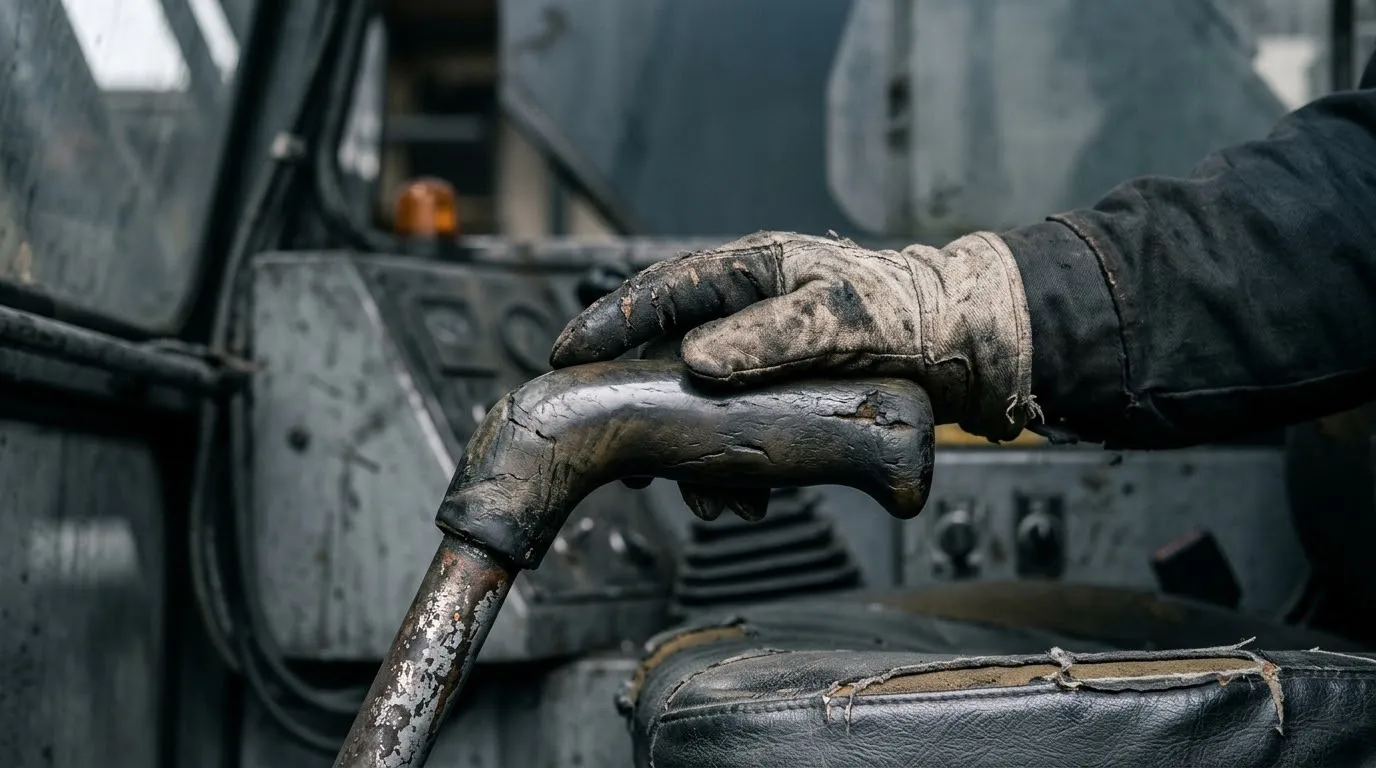
Makana’s own advice reflects how seriously the market treats this. A replaced meter “isn’t necessarily dishonest, but it should be documented in service records. If there’s no record, it’s a red flag.” Buyers are told to cross-check the meter against wear on seats, controls and moving parts, looking for machines whose condition does not match their stated hours.
That is a remarkable amount of effort spent reconstructing a figure that should simply be known. And every bit of doubt is priced in. A buyer who cannot trust the hours discounts the machine to cover the risk, whether or not the meter is actually wrong.
The Market Already Trusts the Manufacturer’s Record
When the meter is in doubt, the guide points buyers to a specific place. “Leading manufacturers store equipment operating history in centralized databases, accessible via authorized dealers.” It describes telematics platforms as working like “verification software for machinery equipment, giving buyers and dealers a way to cross-check the hour meter reading against manufacturer-logged data.”
In other words, the second-hand market already treats a manufacturer-held operating history as more credible than the machine’s own meter. The manufacturer becomes the party that can settle the question.
That only works if the manufacturer actually has the record. For a great many machines, it does not. The history existed in the original owner’s service files, or on the dealer’s system, and it did not travel with the machine when it was sold.
Why Resale Value Is the Manufacturer’s Problem
It is tempting to see the second-hand market as something that happens after the manufacturer’s involvement ends. It does not work that way commercially.
Buyers of new equipment think about what the machine will be worth when they come to sell it. Businesses that finance or lease equipment think about it even more carefully. A product line whose used machines are easy to value with confidence is easier to sell new, and one whose used machines always carry a question mark over their hours is quietly harder.
The same record also underpins anything a manufacturer does in the used market itself: trade-in programmes, refurbishment, certified used equipment, or supporting dealers who sell second-hand units. Each of those depends on knowing, credibly, how hard a machine has been worked. Verified hours carry the same weight in warranty decisions, as covered in how manufacturers reduce the cost of warranty claims.
History Is Lost at the First Change of Owner
The weak point is ownership transfer. The first owner’s maintenance records, dealer service history and operating logs rarely pass cleanly to the second owner, and almost never to the third.
So the history thins out at exactly the stage when it would be most useful. A three-year-old machine being sold for the first time may still have a reasonable trail. A machine on its third owner, a decade in, is often valued on the meter, the wear and a guess.
A record held by the machine and the manufacturer, rather than by whoever currently owns it, does not have this problem. Operating hours accumulate against the unit itself, so the history is continuous regardless of how many times it changes hands. Whether that history keeps a machine in service or points to replacing it is a separate judgement, covered in when to replace equipment instead of repairing it.
What Makes a History Credible
Not every record carries the same weight. A history is most useful when it is recorded by the machine rather than typed in by a person, when it is continuous rather than patchy, when it is held somewhere independent of the seller, and when it covers more than the hour count: whether the machine ran hard or lightly, whether service happened on schedule, and whether there were significant fault events along the way.
That describes, fairly exactly, what a connected machine can produce. It is also what a manually kept service log struggles to produce, however honest the owner.
 Where ARMOR™ Fits
ARMOR™ records operating history from the machine itself. ARMOR 4+™ wires into the equipment’s electrical system and reports runtime hours, voltage and current into ARMOR Asset Central™, building a continuous record against each unit rather than against whoever owns it at the time.
That gives a manufacturer the history the second-hand market is looking for when a meter is in doubt. Access can be shared with dealers and owners through the platform, so a seller can evidence a machine’s history and a buyer can rely on it.
ARMOR™ does not value equipment or operate in the used equipment market. It provides the recorded history that makes valuation more confident. The unit installs non-destructively on standard wiring harnesses, with no bill-of-materials redesign, and how it is built in at the production stage is set out on the ARMOR™ for Equipment Manufacturers page.
Frequently Asked Questions
Does a recorded history guarantee a higher resale price?
No. Condition, market demand and the model’s reputation still drive price. What a credible history removes is the discount a buyer applies for not trusting the hours, which is a real but separate effect.
What if the machine was not connected for its whole life?
Then the recorded history starts when the connection did, and the earlier period still depends on service records and the meter. A partial verified history is still more useful than none, particularly for recent use.
Who should be able to see a machine’s history when it is sold?
That is a decision to make deliberately, ideally before the first unit ships. A reasonable approach is that the current owner can see and share their own machine’s history, and that it can be passed to a buyer at the point of sale.
Does this matter for equipment that is not usually resold at auction?
Yes, wherever a machine changes hands. Trade-ins, fleet disposals, rental returns and refurbished units all depend on knowing how hard a machine has worked, whether or not it ever reaches an auction.
See how ARMOR™ is built into equipment like yours, at the build stage. ARMOR™ for Equipment Manufacturers