Key Takeaways
- Unplanned downtime costs the average Fortune 500 company $2.8 billion a year, about 11% of revenue (2025 industry data).
- Predictive models built on telemetry data now flag issues 30 to 90 days before a traditional inspection would catch them.
- Vibration monitoring alone is expected to carry roughly 40% of the predictive maintenance market’s technique share in 2026.
- Telemetry only pays off when the data reaches a decision, not just a dashboard.
What Is Equipment Telemetry, Exactly?
Equipment telemetry is the continuous stream of operating data a machine generates: vibration, temperature, pressure, run hours, load, and dozens of other signals depending on the asset. On its own, that stream is just numbers. Paired with a baseline for normal operation, it becomes an early warning system.
The distinction matters because plenty of equipment already has sensors bolted on that nobody’s using well. Telemetry isn’t the sensor. It’s what a team does with the pattern the sensor reveals over time.
Why Does Telemetry Matter More Than Ever in 2026?
Because the cost of not having it keeps climbing. Unplanned downtime alone costs the average Fortune 500 company $2.8 billion every year, roughly 11% of revenue (2025 industry data). Meanwhile, 55% of maintenance professionals point to rising parts costs as the main driver behind higher downtime expenses (2025 industry data), which means every hour of avoidable downtime hurts more than it did a few years ago.
That pressure is pulling more budget toward predictive strategies. The predictive maintenance market is projected to grow from roughly $14 billion in 2025 to nearly $18 billion in 2026, with some forecasts putting the category above $80 billion by the early 2030s (2026 industry data). Manufacturing remains the single largest end-use segment driving that spend.
How Accurate Is Telemetry-Based Failure Prediction, Really?
More accurate than most operators expect. Machine learning models built on telemetry data now achieve 80 to 97% prediction accuracy, often flagging developing faults 30 to 90 days before a traditional inspection would find them (2026 industry data).
That lead time is the entire value proposition. A bearing failure predicted three weeks out gets scheduled into the next planned downtime window. The same failure discovered by sound and smoke on the floor becomes an emergency repair, and emergency repairs run three to nine times the cost of planned maintenance once you add rush parts, overtime labor, and idle crews (2026 industry data).
Vibration monitoring specifically is projected to carry about 41% of the predictive maintenance technique market in 2026, ahead of acoustic, thermal, and oil analysis methods combined (2026 industry data), because it catches mechanical wear earlier and more cheaply than most alternatives.
What Does a Realistic Telemetry Rollout Look Like?
Most teams overcomplicate the start. A workable rollout usually follows three stages:
- Establish a baseline. You can’t detect an anomaly without knowing what normal looks like for that specific machine, in that specific environment, under that specific load.
- Pick the failure modes that matter most. Not every asset needs vibration, thermal, and acoustic monitoring on day one. Start with whichever failure mode has burned the most downtime hours historically.
- Route alerts to a person who can act. Telemetry that generates alerts nobody reads is functionally the same as no telemetry at all.
Predictive maintenance adoption actually dipped slightly, from 30% of manufacturers in 2024 to 27% in 2025 (2025 industry data), which suggests some early rollouts stalled somewhere in that second stage. Choosing fewer, higher-value failure modes tends to be the fix.
ARMOR™ is built around that third stage specifically, routing telemetry into the same workflow teams already use for parts, service history, and scheduling instead of a separate dashboard that competes for attention.
How Much Downtime Can Telemetry Actually Prevent?
Predictive maintenance can cut maintenance costs by up to 25% and lift uptime by 10 to 20%, according to Deloitte’s widely cited benchmark (2025 industry data). Encouragingly, 74% of maintenance leads reported the same or less unscheduled downtime in 2025 compared to the year before (2025 industry data), a sign that the data-driven approach is starting to show up in real results, not just market projections.
Frequently Asked Questions
What’s the difference between condition monitoring and equipment telemetry?
Condition monitoring typically refers to checking a specific parameter at a point in time. Telemetry is the continuous data stream that condition monitoring draws from, capturing patterns over hours, days, and months rather than a single snapshot.
Do older machines support telemetry, or only new equipment?
Retrofitting is common and often cost-effective. Wireless sensor kits can add vibration, temperature, or run-hour tracking to legacy equipment without touching the machine’s original control system.
How long before a telemetry program shows ROI?
Most programs show measurable downtime reduction within the first two to three quarters, once a baseline is established and the highest-value failure modes are prioritized rather than trying to monitor everything at once.
Does telemetry replace scheduled maintenance entirely?
No. It supplements it. Most mature programs blend predictive and preventive approaches, since 88% of manufacturers still use preventive maintenance alongside newer predictive tools (2026 industry data).
Explore ARMOR™ Solutions
- About ARMOR™, learn more about the platform standardizing intake across mixed equipment fleets. Contact Us
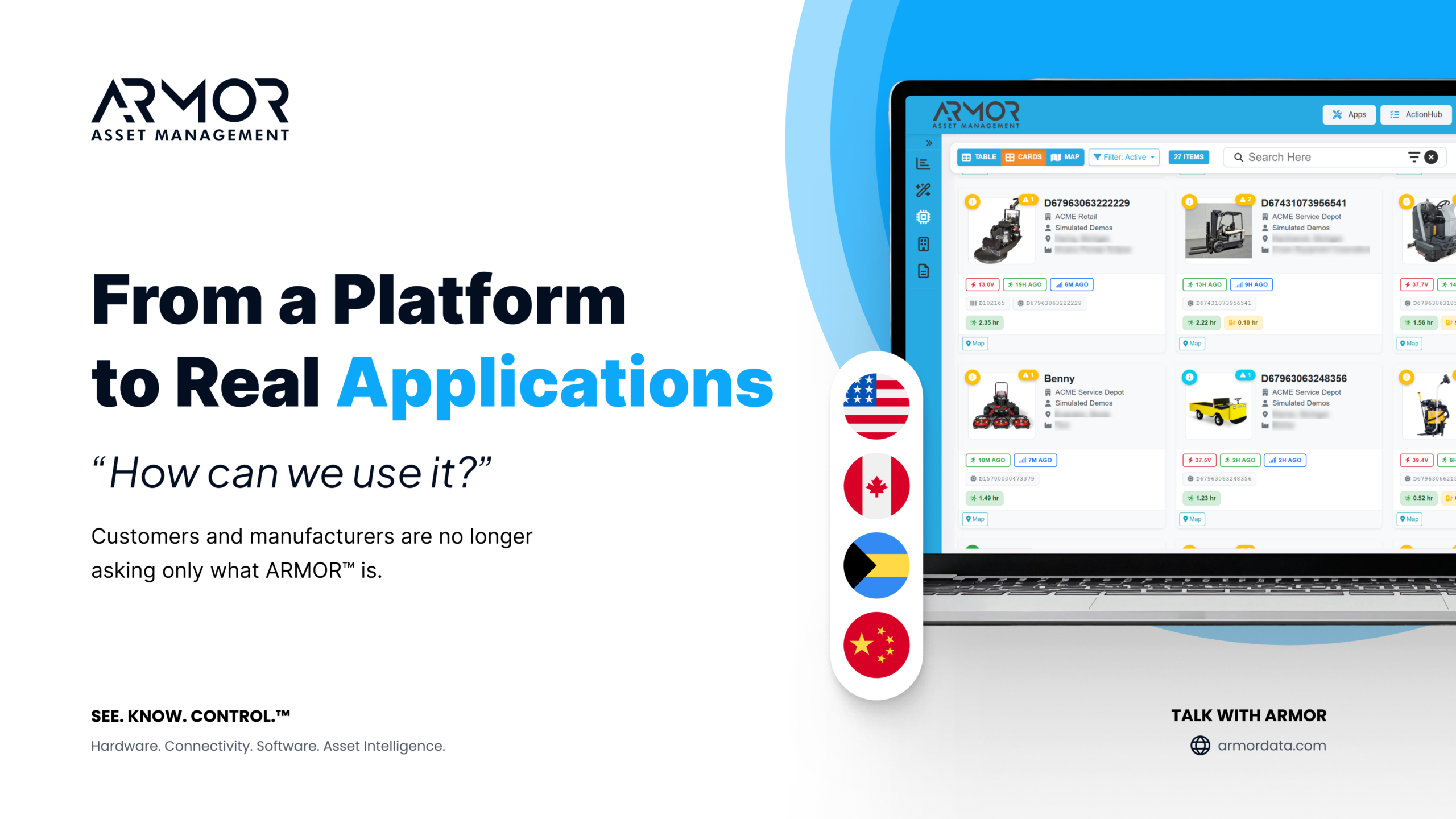
- Asset Central, full details on the unified dashboard for tracking equipment health across sites.
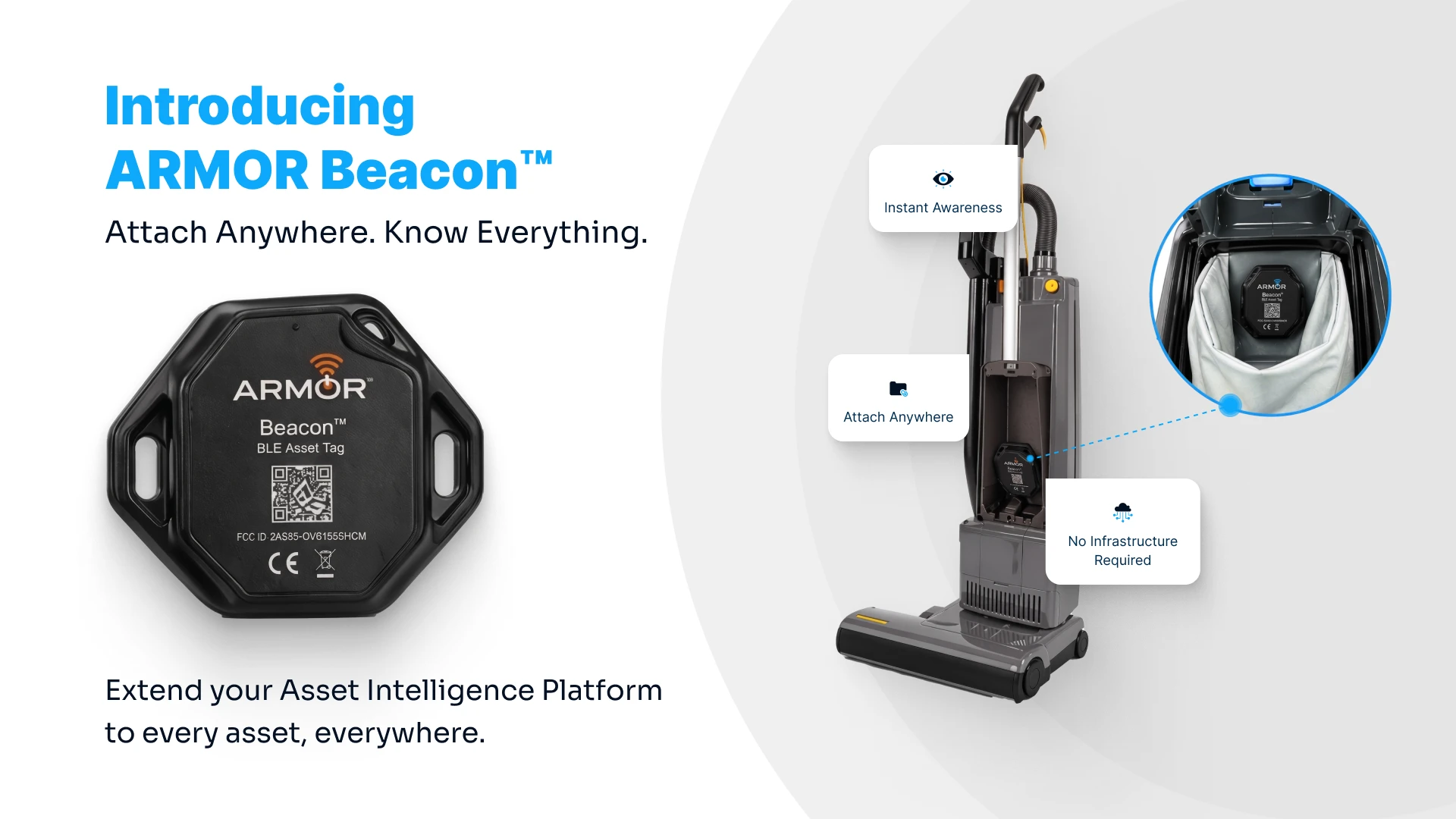
- Beacon, edge-level alerting for the time-sensitive signals discussed in the scaling section.
- Track, asset-level monitoring built for predictive maintenance use cases like those covered here.
- Security Statement, how ARMOR™ stays off your corporate network.