In 2026, Gitnux reported that 70% of companies are unaware of when their equipment is due for maintenance, upgrade, or replacement. That single number explains most unplanned downtime better than any mechanical failure report. Equipment usually shows warning signs before it stops working. The real problem is that most teams have no way to see those signs until the breakdown has already happened and a rush repair is underway. This piece looks at where that visibility gap comes from and how equipment data, delivered as an alert instead of a spreadsheet column, closes it.
Key Takeaways
- 70% of companies are unaware of when their equipment is due for maintenance, upgrade, or replacement (Gitnux, 2026).
- 67% of manufacturers still rely on reactive maintenance, fixing equipment only after it breaks (L2L, 2025).
- The average manufacturing plant loses roughly 800 hours a year to unplanned downtime, over 15 hours a week (Deloitte Advanced Manufacturing Report, 2024).
- ARMOR 4 and 4+ hardware captures real runtime, voltage, and impact data directly from the asset, replacing estimates with actual usage history.
- Customizable alerts and in-app parts requests turn that data into action before a breakdown, not after.
Most Downtime Is a Data Gap, Not a Mechanical Surprise
In 2026, Gitnux found that 70% of companies are unaware of when their equipment is due for maintenance, upgrade, or replacement. When equipment goes down unexpectedly, the usual explanation is that nobody was watching closely enough. In reality, the data that would have flagged the issue, runtime hours, voltage, impact events, was often being generated the whole time. It just was not going anywhere useful.
Read alongside a separate 2025 finding from L2L that 67% of manufacturers still rely on reactive maintenance, fixing equipment only after it breaks, these two figures describe the same gap from two angles: teams are not missing warning signs because they are inattentive, they are missing them because the signs never reach a person who can act on them.
What Unplanned Downtime Actually Costs
In 2024, Deloitte’s Advanced Manufacturing Report put the average manufacturing plant’s unplanned downtime at roughly 800 hours a year, more than 15 hours every week. Costs scale with the size and criticality of the operation, but the pattern holds across fleets of any size: every hour a piece of equipment sits broken instead of scheduled for service is an hour that shows up as a cost somewhere, whether in missed jobs, overtime labor, or rush parts orders.
Smaller fleets and facilities teams rarely see numbers with that many zeros attached, but the underlying mechanism is identical. A breakdown that could have been scheduled becomes an emergency instead, and emergencies are always the more expensive option.
ARMOR 4 and 4+ Turn Equipment Into a Data Source
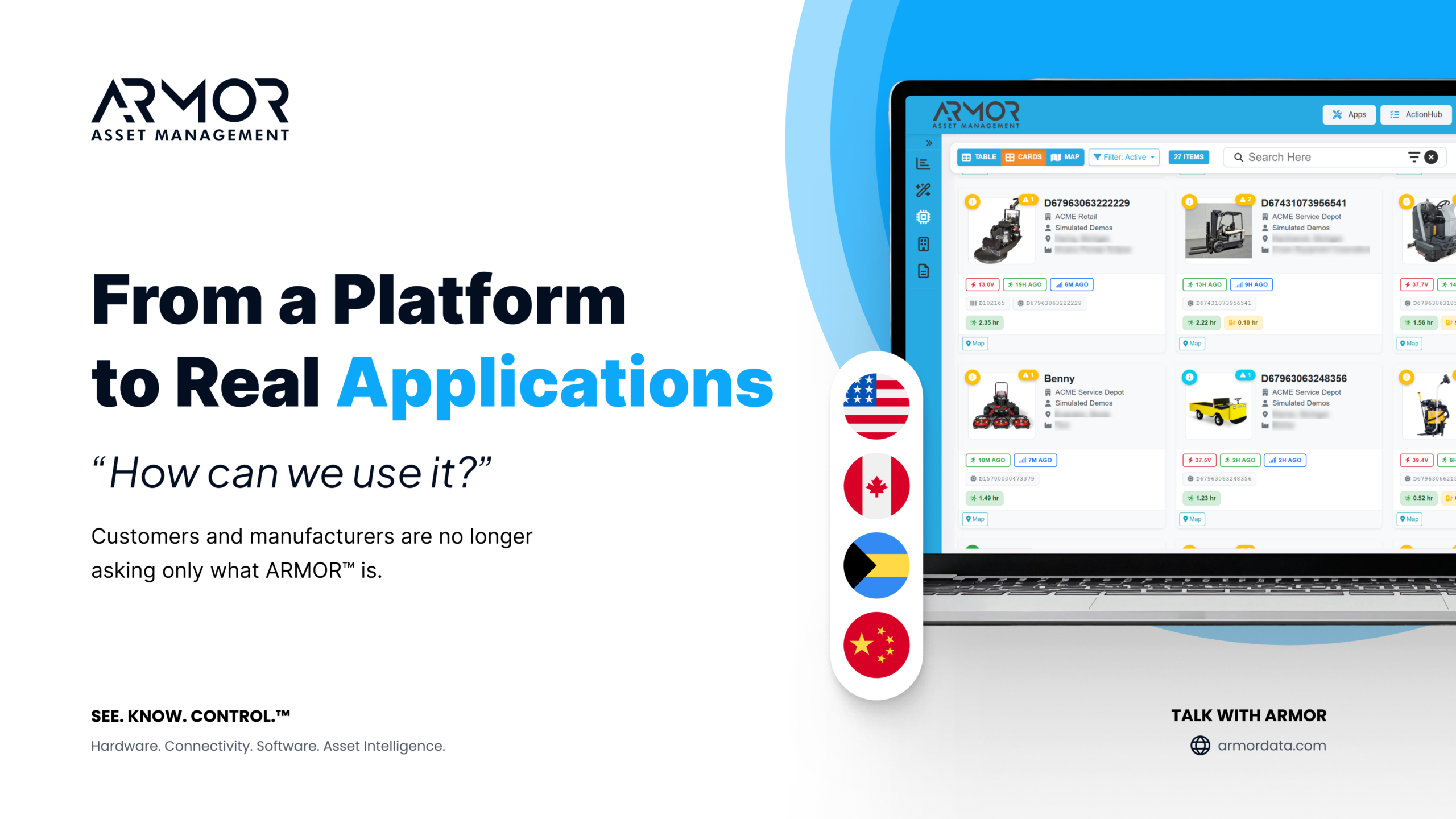
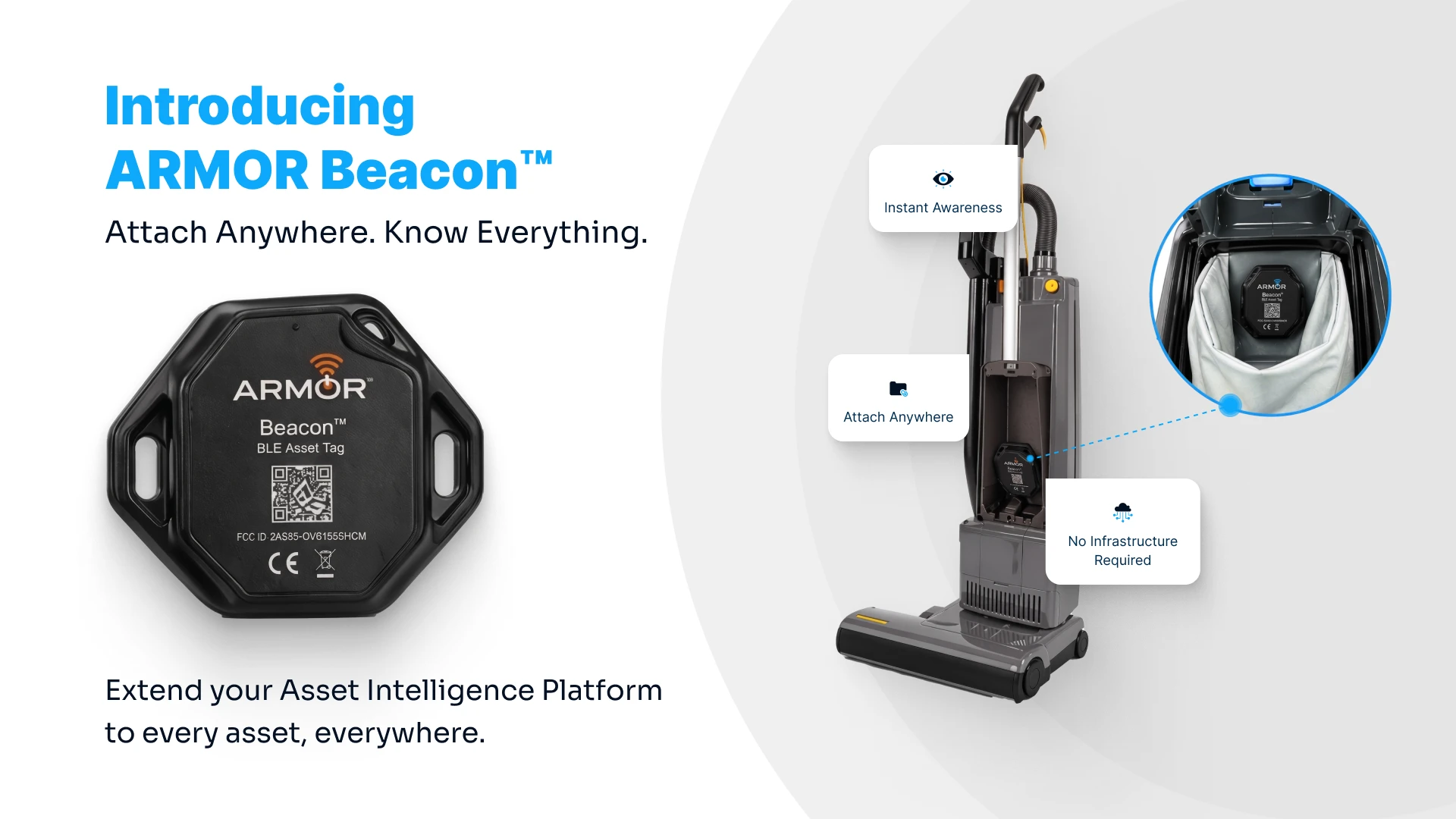
ARMOR 4™ and ARMOR 4+™ hardware bolts directly onto battery-powered and engine-powered equipment, from forklifts and golf carts to delivery vehicles and cleaning machines. Instead of estimating usage from a purchase date, these devices capture real runtime hours, voltage, GPS location, and impact events straight from the asset. That data flows into ARMOR Asset Central™, replacing guesswork with an actual usage history for every unit.
Alerts That Reach Someone Before the Breakdown Does
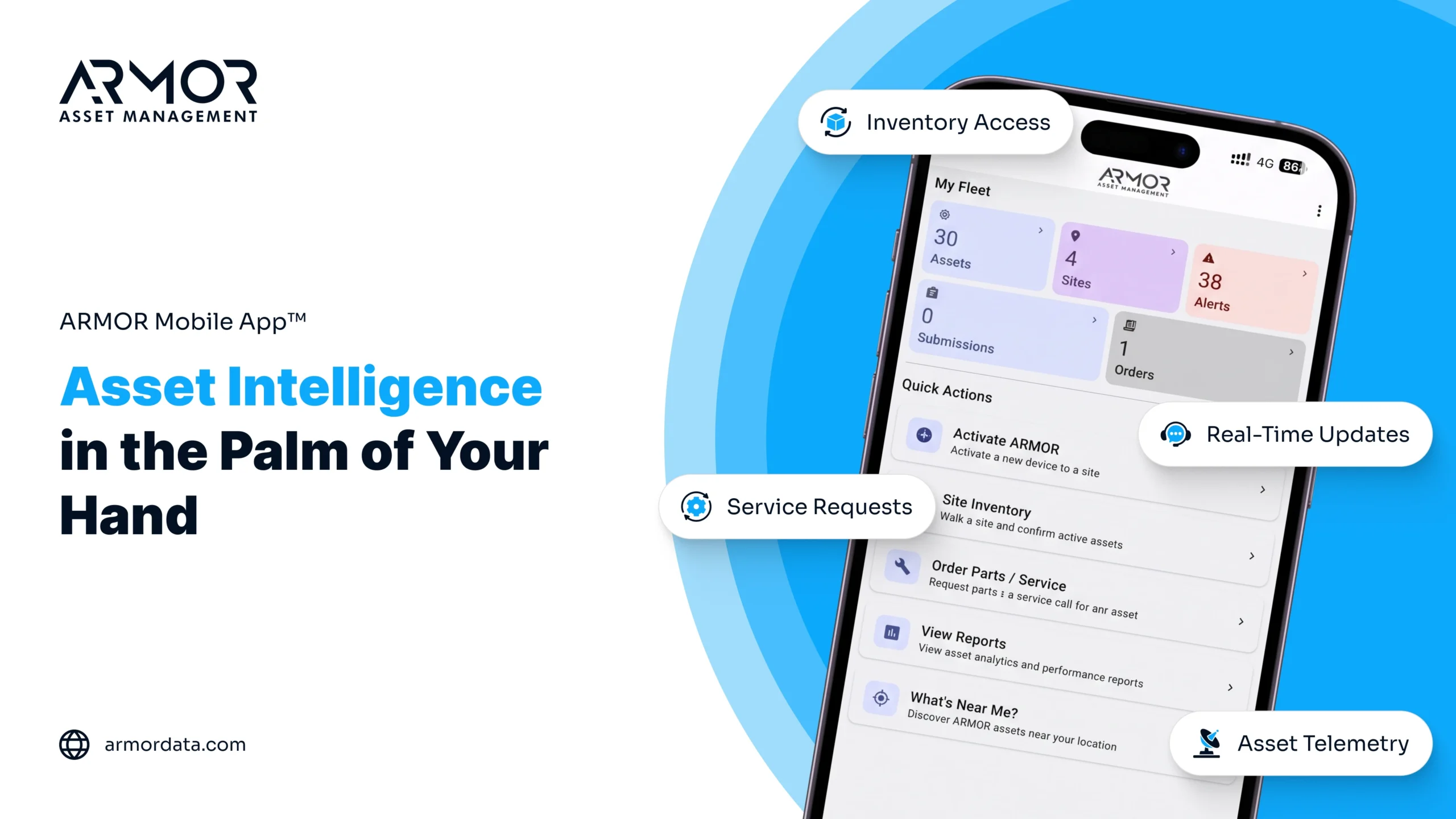
Raw data only helps if it turns into action at the right moment. The ARMOR™ App sends customizable alerts when equipment crosses a service threshold or shows unusual activity, so the person responsible for that asset finds out while there is still time to schedule a repair, not after a crew is standing around a machine that will not start.
This shifts maintenance from a fixed calendar guess to something closer to actual condition. Equipment that is used harder gets flagged sooner. Equipment that sits idle is not serviced on a schedule it never needed.
Ordering Parts and Service Without Leaving the Job Site
Once an alert flags a problem, the next bottleneck is usually getting the right part ordered. The ARMOR™ App lets teams submit parts and service requests directly from the field, tied to the specific asset that needs attention. There is no separate system to log into and no delay waiting for someone back at the office to place the order. The request goes in as soon as the issue is identified.
Why This Data Becomes More Valuable Over Time
Asset Central is the system of record for this data, and it improves with more assets connected to it. Patterns that would be invisible looking at a single machine, which models fail earlier, which sites see heavier use, become visible once runtime and service history accumulate across a fleet. That history turns Asset Central into a source of truth teams can use to plan replacements and budgets, not just react to breakdowns.
What This Looks Like in Practice
A team running a fleet of golf carts and cleaning machines stops reacting to breakdowns as they happen. ARMOR 4 devices flag units approaching their service interval days in advance. A supervisor gets the alert, submits a parts request from the ARMOR™ App the same day, and the unit is serviced before it fails on the job. Downtime shrinks from an unplanned event to a scheduled task.
Frequently Asked Questions
What kind of equipment works with ARMOR 4 and 4+?
Any battery-powered or engine-powered equipment with a starter battery, including forklifts, golf carts, cleaning machines, and delivery vehicles, since the devices bolt onto the existing positive and negative posts.
Can I control which alerts I receive in the ARMOR™ App?
Yes. Alerts are customizable, so teams can set thresholds around runtime hours, voltage, or impact events based on what actually matters for each type of equipment.
How does ordering parts through the app speed things up?
Because the request is submitted directly from the field and tied to the specific asset, it skips the step of relaying the issue back to an office before anyone can order the part.
Why do so many teams still rely on reactive maintenance?
Reactive maintenance persists because the data that would enable a proactive approach, actual runtime and condition, is often trapped on the equipment itself rather than reaching the people who schedule service, a gap reflected in the 67% figure reported by L2L in 2025.
Want to see how ARMOR 4 and the ARMOR™ App can flag issues before they become downtime? Explore Asset Central or reach out to talk through your fleet.