In 2025, an IBM Institute report found that over a quarter of organizations estimate they lose more than $5 million annually due to poor data quality, with 7% reporting losses of $25 million or more. Asset records are one of the most common places that quality quietly fails, since a record can look complete on screen while describing equipment that has already moved, changed condition, or stopped existing altogether. Knowing whether your asset data is accurate is not a matter of trusting the system it lives in. It is a matter of knowing where each number in that system actually came from.
Key Takeaways
- Over a quarter of organizations lose more than $5 million a year to poor data quality, and 7% lose $25 million or more (IBM, 2025).
- Reactive maintenance work costs 12 to 18% more than preventive maintenance when the underlying asset data is missing or outdated, according to a U.S. Department of Energy report cited by Facilities Dive (2026).
- Data accuracy depends on where a number originated, not on how recently it was viewed.
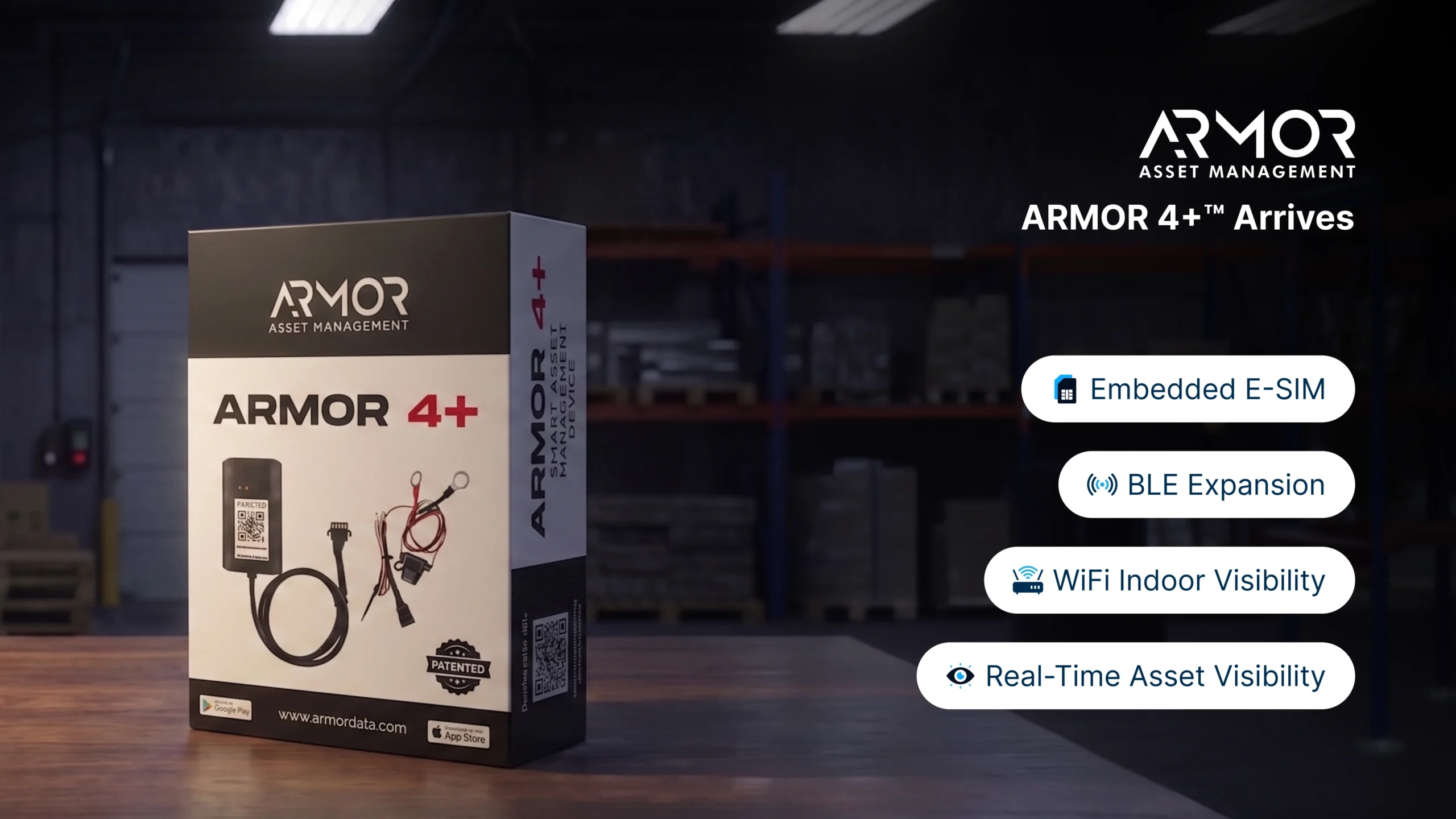
- ARMOR 4+™ captures runtime hours, voltage, GPS location, and impact events directly from the asset itself, not from purchase records or manual entries.
- ARMOR Asset Central™ functions as the system of record precisely because every figure in it traces back to a verified field source.
Why “Accurate” Is Harder to Guarantee Than It Sounds
In 2025, IBM found that more than a quarter of organizations lose upward of $5 million a year to poor data quality, a figure that holds across industries because the underlying problem is not industry specific. A record can be technically present, technically recent, and still wrong, because accuracy depends on where the number came from, not on how the record looks. A runtime hour typed in from memory and a runtime hour read directly off a device are indistinguishable in a spreadsheet cell. They are not indistinguishable in reality.
This is why accuracy audits so often miss the actual problem. An audit checks whether a field is filled in, not whether the value in that field was observed or estimated. A fully populated asset register can pass every completeness check while still being built on guesses.
What Reactive Maintenance Actually Costs When the Data Is Wrong
In 2026, a U.S. Department of Energy report cited by Facilities Dive found that maintenance costs can run 12 to 18% higher when work is reactive rather than preventive. That gap exists downstream of a data problem: preventive maintenance requires trusting the runtime and condition data enough to schedule service before failure, and teams cannot schedule around numbers they do not trust. When the data is uncertain, the fallback is always reactive, and reactive is the expensive option.
This connects directly to the accuracy question. It is not enough for asset data to exist. It has to be trustworthy enough that someone is willing to make a scheduling decision based on it.
Verified at the Source: How ARMOR 4+ Captures Data Differently
ARMOR 4+™ is built on verified asset data collected directly from the field. It captures actual runtime hours and operating conditions from the asset itself, not from purchase records or manual entries. The device bolts onto battery-powered and engine-powered equipment and reports runtime hours, voltage, GPS location, and impact events as they happen, which means the number in Asset Central reflects what is actually occurring in the field, not what someone estimated or last updated on a spreadsheet.
Deployment does not require replacing anything. ARMOR 4+™ uses non-destructive integration, installing alongside existing assets without replacing or interfering with them, so there are no workflow changes, no system migrations, and no retraining required to start capturing verified data.
What “System of Record” Actually Means for Your Assets
A system of record is the single authoritative source for a specific type of data. ARMOR Asset Central™ is the system of record for physical asset data: real runtime hours, verified asset identity, lifecycle status, and field conditions. Every team in your organization references the same current, accurate picture instead of maintaining separate records that drift from reality on their own individual timelines.
That distinction matters more than it sounds. A shared spreadsheet is also, technically, a single file everyone looks at. It is not a system of record, because nothing in it verifies that the numbers are still true. A source of truth has to be continuously verified, not just centrally stored.
What This Looks Like in Practice
A facilities team stops asking “when was this record last updated” and starts asking “where did this number come from.” A runtime figure traced to ARMOR 4+™ hardware gets treated as fact. A figure that only exists because someone typed it in six weeks ago gets flagged for verification. Over time, the questions asked in a service meeting shift from arguing about whose spreadsheet is current to acting directly on what Asset Central already confirms.
Frequently Asked Questions
How do we know the asset data in ARMOR™ is accurate?
ARMOR Asset Central™ is built on verified asset data collected directly from the field by ARMOR 4+™ hardware, which captures actual runtime hours and operating conditions from the asset itself rather than from purchase records or manual entries.
Does deploying ARMOR™ disrupt our operations?
No. ARMOR 4+™ uses non-destructive integration, meaning it installs alongside your existing assets without replacing or interfering with them. There are no workflow changes, no system migrations, and no retraining required.
What does system of record mean for physical assets?
A system of record is the single authoritative source for a specific type of data. ARMOR Asset Central™ is the system of record for physical asset data, including real runtime hours, verified asset identity, lifecycle status, and field conditions.
Why does data accuracy matter more than data completeness?
A record can be fully filled in and still wrong if the values were estimated rather than observed. Accuracy depends on whether a number was verified at its source, not on whether every field in the record has something written in it.
Want to see what verified asset data actually looks like inside your operation? Explore ARMOR 4+™ or talk to our team about connecting your first assets.