You connect asset intelligence to maintenance, service, and ordering by routing verified asset data directly into the workflows that act on it, so a runtime alert becomes a work order, a work order checks part availability automatically, and a part shortage triggers an order before the equipment goes down. Without that connection, each step still happens, but a person has to notice the alert, remember to create the ticket, and manually check whether the part is even in stock.
That manual handoff is where most of the value gets lost. The data exists. The problem is that it sits in one system while the action happens in another, and nobody owns the gap between them.
Key Takeaways
- A $200 part shortage can cost $50,000 in lost production while a line sits idle waiting for it to arrive.
- 23% of unplanned downtime events are directly caused by unavailable spare parts (Aberdeen Group via CPCON, 2026).
- Predictive maintenance programs document 10:1 to 30:1 ROI within 12 to 18 months of connected implementation.
- Emergency parts sourcing runs at a 15% to 30% price premium over planned procurement.
- Most predictive maintenance platforms generate alerts but don’t automate the response, leaving the alert-to-work-order-to-part gap for a person to close manually.
Why Doesn’t an Alert Alone Fix Anything?
An alert alone doesn’t fix anything because detecting a problem and acting on it are two separate steps, and most platforms only handle the first one. When a vibration alert fires at 2 a.m., someone still has to get notified, decide whether it’s urgent, create the work order, and check whether the part needed to fix it is actually on the shelf.
That gap has a name in manufacturing circles: integration debt, a collection of systems that each automate one task but don’t talk to each other (US Tech Automations, 2026). A CMMS that doesn’t feed data to the ERP. A monitoring platform that doesn’t tell the warehouse a part will be needed. Each piece works fine in isolation, and the value of the data is reduced every time it sits in a silo instead of flowing to the next system that needs it.
The fix isn’t more alerts. It’s automating the alert-to-action path itself, from the sensor trigger to the work order to the parts check to the technician assignment, so the gap between knowing and doing closes automatically instead of depending on someone catching the notification in time.
How Does Connected Asset Data Change Maintenance Scheduling?
Connected asset data changes maintenance scheduling by replacing a fixed calendar with actual equipment condition. Preventive maintenance, the current default for 71% of maintenance teams, services equipment on a schedule whether it needs it or not (GetMaintainX, 2025). Predictive maintenance, still used by only 27% of teams, ties the same service to what the asset is actually reporting.
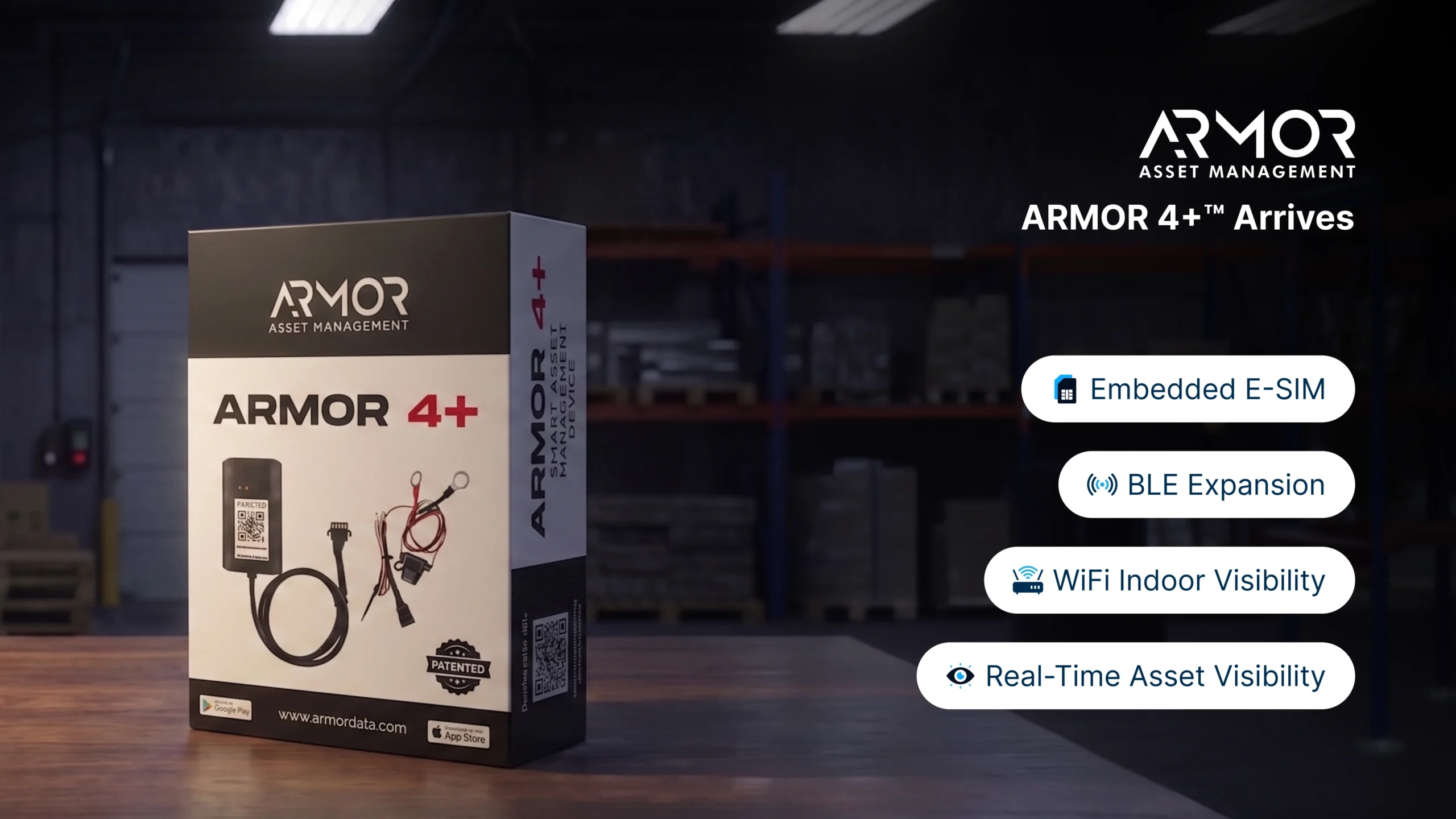
The return on making that switch is well documented. Predictive maintenance can reduce maintenance costs by up to 25% and increase uptime by 10% to 20% (Deloitte via GetMaintainX, 2025), and mature implementations document 10:1 to 30:1 ROI within 12 to 18 months once the alert-to-action loop is fully connected (OxMaint, 2026). ARMOR 4+™ feeds the runtime, battery, and location data that makes this shift possible directly into ARMOR Asset Central™, so a service trigger is based on what the asset is actually doing, not when it last got serviced.
| Maintenance Model | Trigger | Typical Outcome |
|---|---|---|
| Reactive | Equipment failure | Highest cost, full downtime, emergency parts sourcing at a 15-30% premium (OxMaint, 2026) |
| Preventive | Fixed calendar interval | Reduces surprises but services healthy components unnecessarily |
| Predictive / Connected | Real asset condition data | 10:1 to 30:1 ROI, 10-20% uptime improvement (OxMaint, 2026) |
How Do You Connect Maintenance Triggers to Automatic Ordering?
You connect maintenance triggers to automatic ordering by letting a scheduled or predicted service event check part availability the moment it’s created, not after a technician arrives and finds the part missing. Right now, that check rarely happens early enough. Stockouts directly cause 23% of unplanned downtime events (Aberdeen Group via CPCON, 2026), not because the part was unaffordable, but because nobody knew it was needed until the equipment was already down.
The cost asymmetry here is stark. A $200 bearing shortage can cost $50,000 in lost production while a line sits idle waiting for a part that could have been ordered days earlier (ProcureDesk, 2026). Emergency sourcing doesn’t just cost downtime either. Rush orders typically run 15% to 30% above planned purchase rates, and in some sectors 3 to 5 times the normal price (CPCON, 2026). Automated ordering closes that gap by checking availability against the maintenance trigger itself, so the order goes out on day one of a predicted 21-day failure window instead of the day the part is discovered missing. This is exactly the layer ARMOR Asset Central™‘s automated ordering workflows are built to handle, connecting a runtime-based service trigger straight to a purchasing action instead of leaving that step for someone to catch manually.
What Does a Fully Connected Maintenance-to-Ordering Loop Look Like?
A fully connected loop looks like four steps that happen without a person manually bridging any of them: the asset reports a condition, the platform converts that condition into a work order, the work order checks part availability, and a shortfall triggers an order automatically. Each step already exists in most operations today. The difference is whether they’re connected or sitting in separate systems waiting for someone to notice.
Full audit trail and compliance records matter here too, since connected systems don’t just act faster, they also document every step for later review. That closes a second gap beyond speed: knowing exactly when an asset was flagged, when the work order was created, and when the part was ordered, all from one record instead of piecing it together across three systems after the fact.
Distribution networks and multi-site operators get the clearest version of this benefit, since a single verified fleet record means a service trigger on one site’s equipment can check inventory across every location instead of assuming the part only exists in one warehouse. ARMOR™ is built around that full loop, connecting field hardware, the system of record, and the ordering workflow so maintenance, service, and procurement work from the same verified data instead of three separate assumptions about what the asset needs.
Frequently Asked Questions
What does it mean to connect asset intelligence to maintenance?
It means maintenance gets triggered by real asset conditions, runtime hours, battery health, or usage patterns, instead of a fixed calendar. The work order reflects what the equipment actually needs rather than what a schedule assumes it needs.
How much does a missing part actually cost if maintenance and ordering aren’t connected?
Far more than the part itself. A $200 component shortage can cost $50,000 in lost production while a line sits idle waiting for the part to arrive, since the delay is measured in downtime, not procurement cost (ProcureDesk, 2026).
Can automated ordering actually work without replacing our ERP or procurement system?
Yes. Automated ordering triggered by asset data can sit alongside an existing ERP or procurement workflow, supplying the trigger and the part information while the existing system still handles the purchase order and approval chain. The Support team can walk through how this fits a specific setup.
What’s the difference between predictive maintenance and connected asset intelligence?
Predictive maintenance flags that something will fail. Connected asset intelligence takes that flag and automatically creates the work order, checks part availability, and triggers the order, closing the loop instead of leaving the alert for someone to act on manually.
Does connecting these systems require sensors on every single asset?
No. Most operations start with their highest-value or highest-failure-risk assets, since that’s where the return is highest, and expand coverage as the system demonstrates results on those units.
Asset data only pays off when it reaches the systems that act on it. ARMOR™ connects field hardware, a cloud system of record, and automated ordering workflows into a single asset intelligence platform, without replacing the ERP you already rely on. Request a demo to see what your assets have been trying to tell you.