Key Takeaways
- OEM IoT means an equipment manufacturer builds connectivity, sensors, and data reporting into a machine on the factory floor, not after the sale.
- The global industrial IoT market is on pace to grow from $194.4 billion in 2024 to $286.3 billion by 2029, an 8.1 percent annual growth rate (MarketsandMarkets).
- Major heavy equipment OEMs, including Caterpillar, Komatsu, Volvo CE, JCB, and Hitachi, already ship factory-installed telematics as standard on their largest machines (MarketsandMarkets).
- OEM IoT differs from a retrofit or bolt-on sensor kit added to equipment already in the field. Each approach fits a different stage of an OEM’s product line.
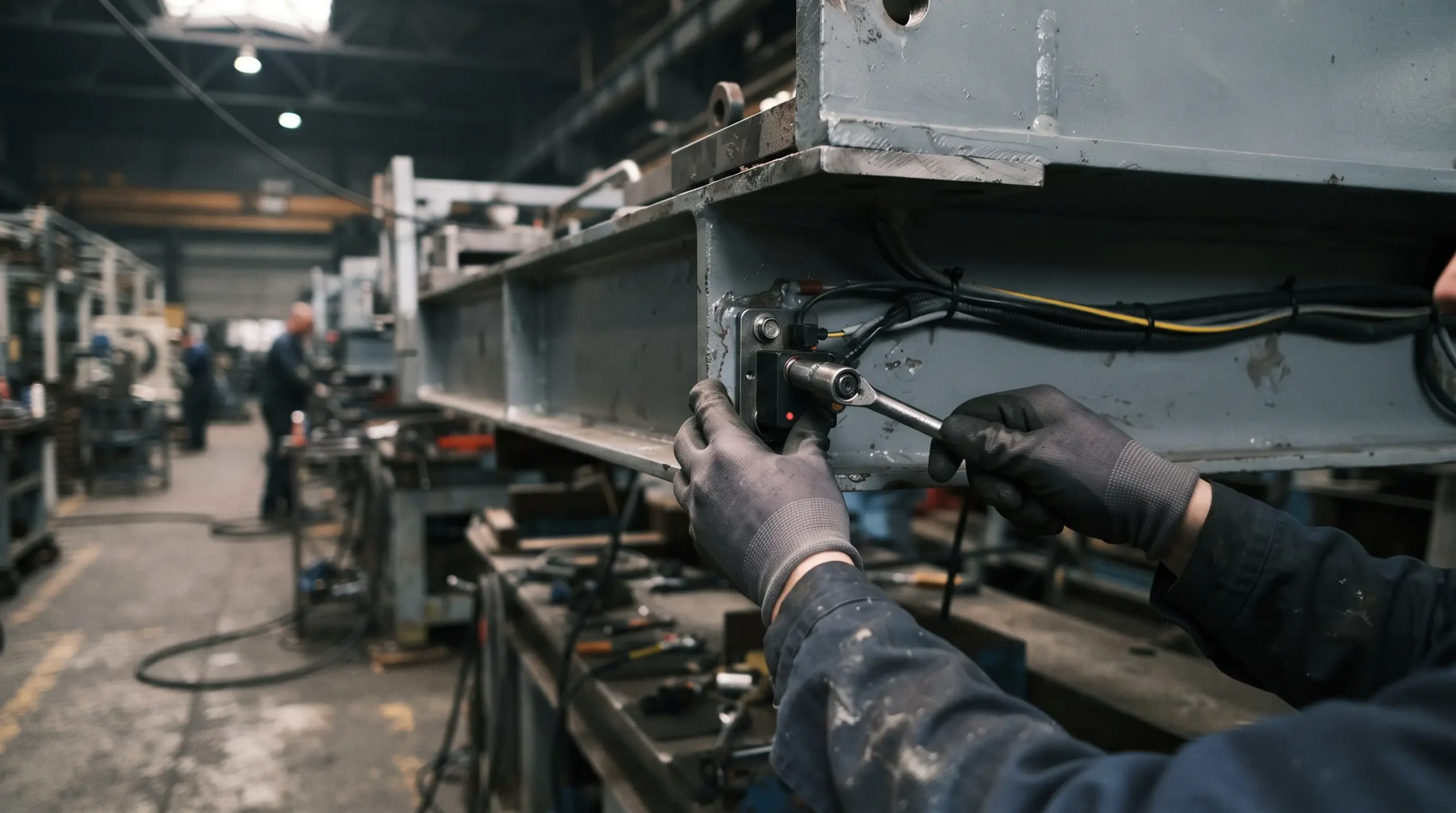
OEM IoT is the practice of an original equipment manufacturer embedding sensors, connectivity, and data reporting into a machine during production, rather than adding it after the sale. The manufacturer owns the data pipeline from day one, which means every unit that leaves the factory reports location, runtime, and condition data back to the OEM and, through the OEM’s platform, to the customer.
 Why Are Equipment Manufacturers Building Connectivity In?
Equipment manufacturers are building connectivity in because the heavy equipment telematics market alone is projected to grow from $1.33 billion in 2025 to $3.21 billion by 2032, a 13.4 percent compound annual growth rate (MarketsandMarkets). That growth is not speculative. Major construction equipment OEMs, including Caterpillar, Komatsu, Volvo CE, JCB, and Hitachi Construction Machinery, already offer factory-installed telematics as a standard feature on their largest machines.
Connectivity built in at the factory gives an OEM a data advantage a retrofit vendor cannot match. The manufacturer controls the sensor placement, the firmware, and the data schema from the first day a machine runs, which means the resulting data set is consistent across every unit in a fleet, not patched together from whatever a third-party kit happened to capture.
What Does an OEM IoT System Actually Include?
An OEM IoT system typically includes four layers: onboard sensors that measure runtime, location, and machine health, a connectivity layer that transmits that data (usually cellular or satellite), a cloud platform that stores and processes it, and a customer-facing dashboard or app that turns the data into something a fleet manager can act on.
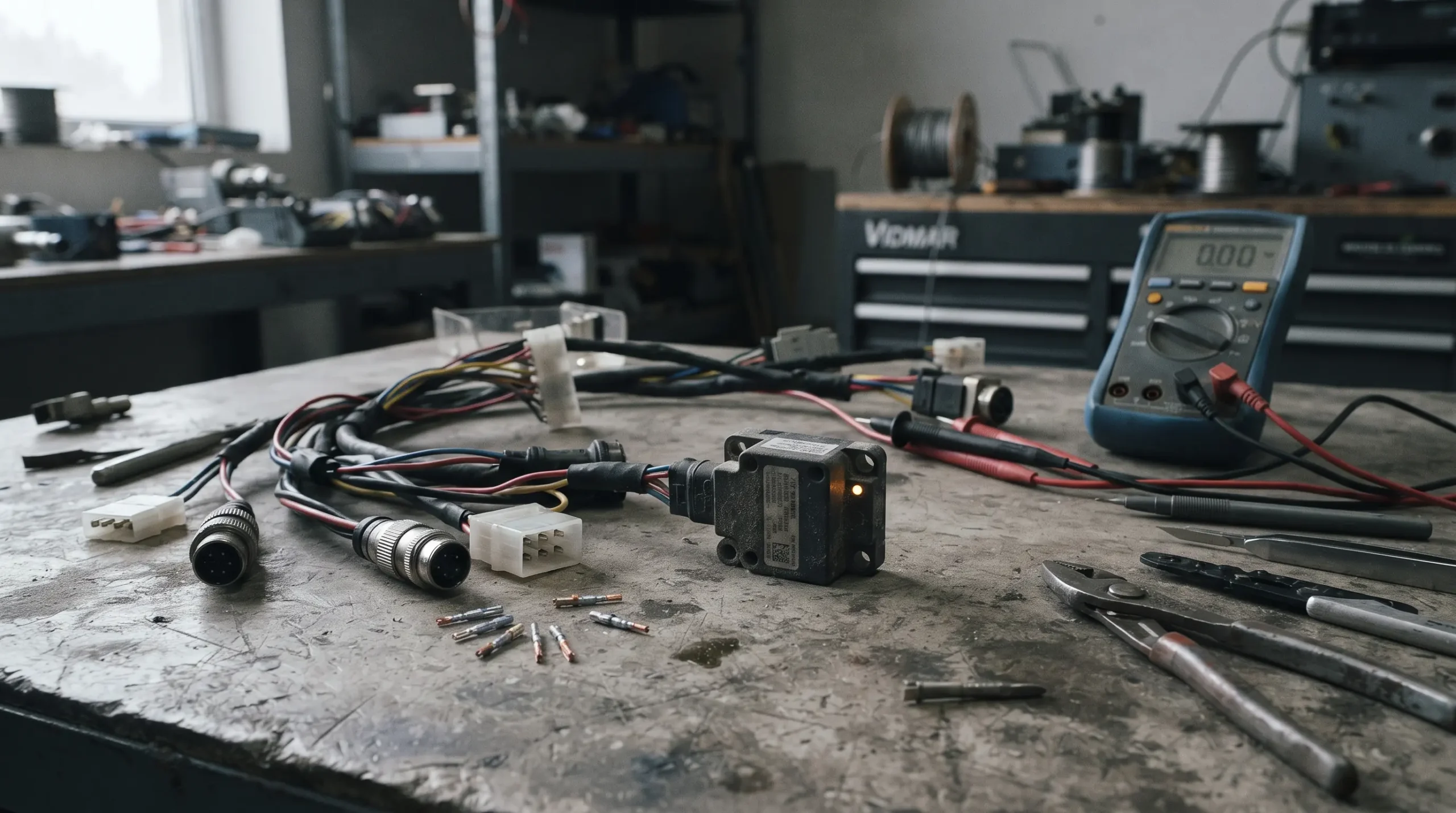 Each layer matters for a different reason. Sensors without reliable connectivity produce data that never leaves the machine. Connectivity without a platform produces a data dump nobody can use. A platform without a usable interface produces reports that sit unread. An OEM that treats all four layers as one system, rather than four separate vendor purchases, tends to end up with data customers actually use.
How Is OEM IoT Different From a Retrofit or Bolt-On Sensor?
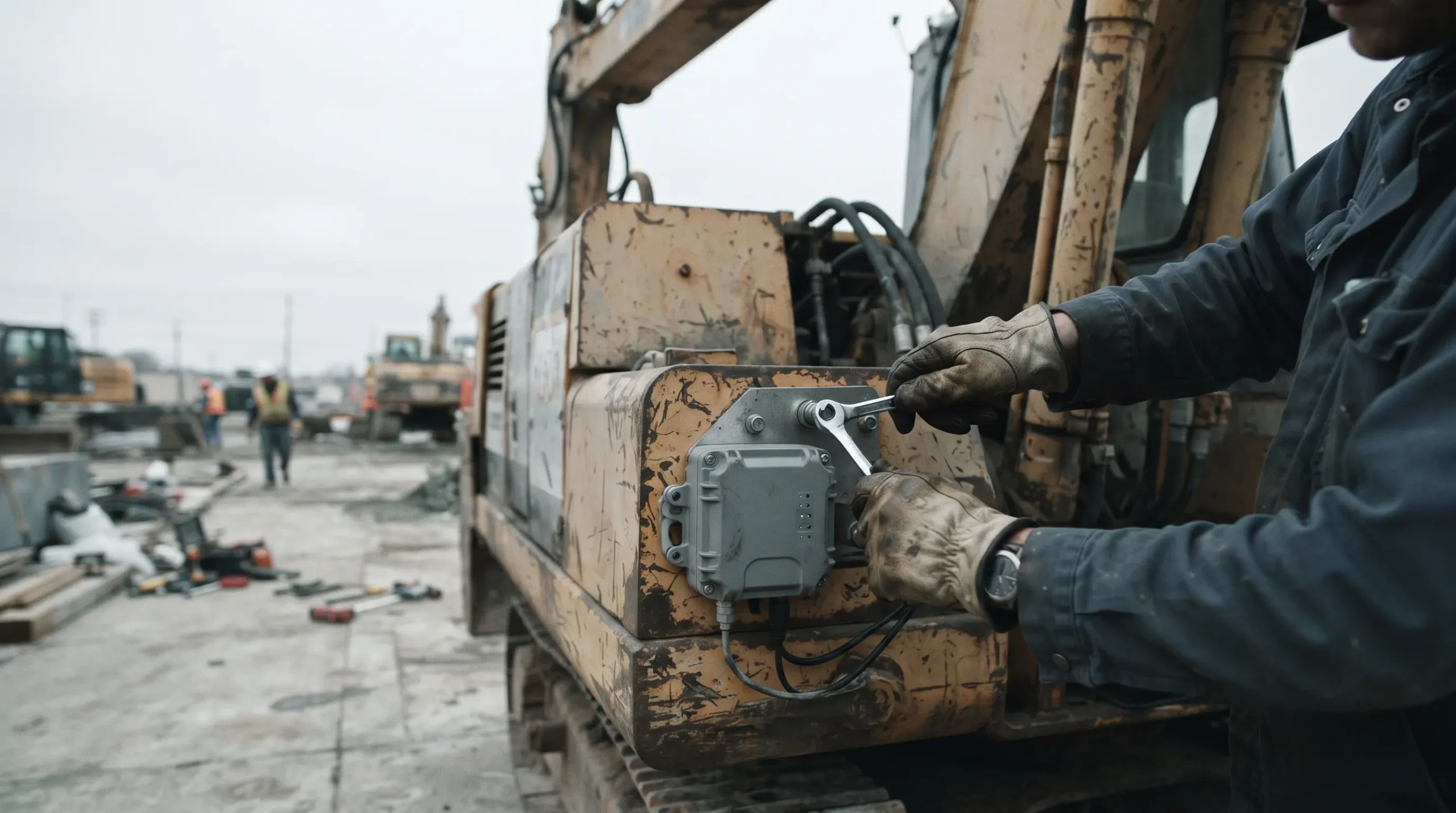
OEM IoT is built into a machine before it ships, while a retrofit or bolt-on system is added to equipment already in a customer’s fleet. Analysis of the connected-equipment market shows established OEMs increasingly bundling monitoring directly into new equipment sales, pricing it into the larger deal and keeping the maintenance workflow inside their own field service network, while retrofit vendors remain strongest on older assets, mixed fleets, and equipment classes the OEM does not cover well.
That split is not a competition so much as a lifecycle map. A brand-new machine is the OEM’s to instrument from the factory floor. A ten-year-old machine already in a customer’s yard is a retrofit candidate, because there is no factory pass left to build connectivity into. Most equipment manufacturers end up running both strategies at once: embedded IoT on new production, and a retrofit or bolt-on option for the installed base that predates it.
 What Does It Cost an OEM to Skip Connectivity?
Skipping connectivity costs an OEM the aftermarket relationship, not just a feature checkbox. McKinsey research indicates aftermarket services can represent up to 40 percent of an equipment manufacturer’s annual profit, and Deloitte has found aftermarket services carry roughly a 25 percent margin compared to about 10 percent on new equipment sales, a gap connected machines are best positioned to capture through better-scheduled service and parts forecasting.
Without machine data flowing back to the OEM, none of that aftermarket opportunity is visible until a customer calls with a problem. Connected OEMs see the problem coming, in the sensor readings, before the customer notices it in the field.
An Industry Perspective
Connected-equipment platform Trackunit frames the shift in terms of the customer relationship itself: for OEMs, machine data can create “a relationship that spans the entire machine lifecycle,” according to Martin O’Rourke, the company’s Director of Communications, rather than a relationship that ends at the sale.
Frequently Asked Questions
What is the difference between OEM IoT and industrial IoT?
Industrial IoT is the broad category of connected sensors and systems across manufacturing and industrial settings. OEM IoT is the specific practice of an equipment manufacturer embedding that connectivity into its own products at the factory, one slice of the larger industrial IoT market projected to reach $286.3 billion by 2029 (MarketsandMarkets).
Do all equipment manufacturers offer OEM IoT?
No. Adoption is concentrated among larger heavy equipment OEMs so far. Caterpillar, Komatsu, Volvo CE, JCB, and Hitachi Construction Machinery commonly ship factory-installed telematics on their largest machines, while many mid-size and smaller manufacturers still rely on third-party retrofit options (MarketsandMarkets).
Is OEM IoT only useful for large fleets?
No. A single connected machine still reports runtime, location, and condition data the owner would otherwise have to track manually. The value scales with fleet size, but even one-machine operators benefit from knowing a failure is coming before it happens.
How long does it take an OEM to add embedded connectivity to a product line?
This varies by product complexity and depends on sensor selection, firmware development, and platform integration. It is a design decision made early in a product’s development cycle, not something added after the fact, which is part of why manufacturers with older product lines often rely on retrofit options in the interim.
Where This Fits in Your Equipment Strategy
If you manufacture equipment and are weighing embedded connectivity against a retrofit approach for your installed base, ARMOR™ Asset Management gives you both: a platform built for OEM-embedded hardware and one that supports connected retrofit programs for equipment already in the field.