Why Do Manual Inventory Counts Never Quite Match Reality?
Manual inventory counts drift from reality because the record is only accurate for the exact moment it is written down, and every asset move, transfer, or retirement after that point goes unrecorded until the next count. In 2026, industry research puts the average inventory accuracy rate across companies at roughly 83 percent, and fewer than 70 percent of businesses actively track inventory accuracy as a key performance indicator at all (Skulabs, Inventory Management in 2026, 2026). That means roughly 17 out of every 100 records are wrong at any given time, and most organizations are not even measuring the gap.
Key Takeaways
- Average inventory accuracy across companies sits near 83 percent, and most businesses do not track this KPI at all (Skulabs, 2026).
- Manual and legacy asset inventory processes see error rates between 30 and 60 percent (Procured, 2026).
- The ARMOR Mobile App captures inventory data at the moment and location of observation, not days later during reconciliation.
- Closing the timing gap, not counting harder, is what actually fixes inventory accuracy.
Why Do Error Rates Stay So High Even With Regular Counts?
Error rates stay high because regular counting does not fix a process where data enters the system too far after the fact to matter. In asset-heavy operations still relying on manual and legacy tracking methods, error rates often hover between 30 and 60 percent, a gap that causes delays and wasted effort every time a job depends on that data being right (Procured, How to Improve Asset Inventory Management in 2026, 2026).
Most organizations respond to this by counting more often, adding an extra audit, a mid-year check, a surprise recount. That treats the symptom. The underlying issue is not counting frequency. It is that the data is captured by a person writing something down well after the asset has already moved on, been serviced, or been retired. No amount of additional counting closes a timing gap that large.
How Does the ARMOR Mobile App Fix Inventory Accuracy at the Source?
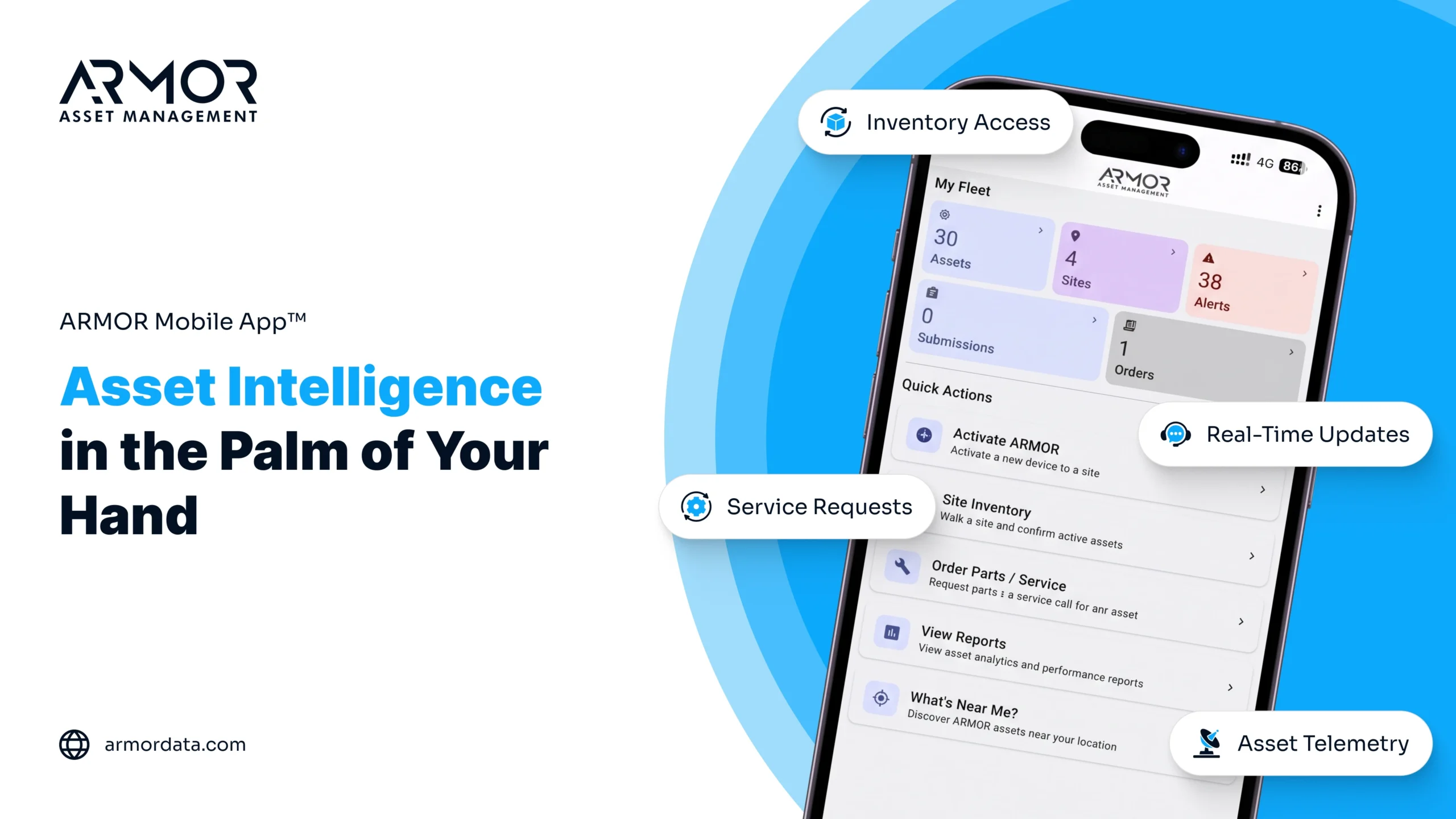
The ARMOR Mobile App fixes inventory accuracy by moving data capture to the moment and location where an asset is physically observed, instead of relying on a person to recall and re-enter it later. A field team scans and records an asset directly where it sits, and that update syncs immediately to ARMOR Asset Central, the system of record. There is no batch upload, no spreadsheet re-entry, and no reconciliation meeting required to catch up.
This is the same principle behind why ARMOR 4+ hardware captures runtime hours directly from the asset rather than from a purchase log. Data collected at the source, at the moment it changes, is the only kind of inventory data that stays reliably accurate between formal audits.
What Actually Improves Once Inventory Is Captured at the Source?
Capturing inventory at the source improves three things immediately: counts stop drifting between audits, missing or misplaced assets surface as soon as a scan is missing rather than during a year-end surprise, and every team, field and office alike, works from the same current picture instead of comparing conflicting versions of the truth. That third point matters more than it sounds. When office staff and field staff are staring at different numbers, every conversation about inventory starts as a disagreement about facts before it can even become a decision.
This also removes a quiet source of friction between field and office teams. Field staff frequently get asked to explain discrepancies that were baked into the system before they ever touched the asset. Capturing data at the source shifts responsibility for accuracy away from human memory and back onto the moment of observation, where it belongs.
Does This Approach Scale Beyond a Single Facility?
Yes, and it scales the same way regardless of fleet size. Whether an operation manages a few hundred assets or tens of thousands, the principle stays constant: accuracy comes from capturing data closer to the moment it changes, not from counting harder after the fact. The ARMOR Mobile App is built to scale with ARMOR Asset Central from day one, so a multi-location organization gets the same source-level accuracy at every site.
Frequently Asked Questions
How is scanning with the ARMOR Mobile App different from a manual spreadsheet count?
A manual count records what a person observes at one point in time and enters later, often after a delay. Scanning with the ARMOR Mobile App captures asset data directly in the field and syncs it to ARMOR Asset Central immediately, so the system of record reflects the present rather than catching up after the fact.
Does inventory captured through the app feed into cost or lifecycle reporting?
Yes. Data captured through the ARMOR Mobile App flows into ARMOR Asset Central, which combines it with runtime data from ARMOR 4+ hardware to support total cost of ownership and lifecycle reporting.
Can multiple team members capture inventory across different sites at the same time?
Yes. Because updates sync in real time to a single system of record, teams across multiple locations can capture inventory simultaneously without creating conflicting or duplicate records.
What inventory accuracy rate should an organization be aiming for?
Since the average across companies sits near 83 percent, an organization capturing data at the source through scanning rather than relying on periodic manual counts should expect to close a meaningful part of that gap, since the delay between an asset moving and the record updating is largely eliminated.
Stop Reconciling. Start Trusting the Count.
Accurate inventory does not come from a better spreadsheet. It comes from capturing data where the asset actually lives. See how the ARMOR Mobile App captures inventory in the field or talk to an ARMOR specialist about your fleet.